How to Choose a Top China Coal Gas Blower Supplier?
Choosing a top China Coal Gas Blower supplier requires more than comparing prices or reading polished brochures. The IEA Coal 2023 report noted that China, India, and Indonesia represented about three-quarters of global coal demand in 2022. This scale supports a large manufacturing base, but it also creates wide differences in engineering quality, testing discipline, and after-sales service.
A reliable supplier should provide a complete performance curve, including airflow, pressure, temperature, efficiency, and motor power. Ask for test records that match the proposed operating point. A blower may look powerful on paper yet fail when gas contains dust, moisture, or corrosive compounds. Details matter. Check impeller material, shaft sealing, vibration limits, bearing life, and noise data. ISO 9001 certification is useful evidence, but certification alone is not proof of strong field performance. Request references from comparable coal gasification or industrial gas projects.
The IEA’s World Energy Outlook and Coal reports show that coal-related systems remain exposed to changing efficiency, emissions, and energy policies. Therefore, supplier selection should include lifecycle reliability, maintenance access, electrical compliance, and documented safety procedures. IEC standards may help, depending on the project location and hazardous-area classification. A serious China Coal Gas Blower supplier should explain these requirements clearly, not hide behind technical language.
I would not trust the lowest quotation automatically. It may exclude commissioning, spare parts, or performance testing. That assumption deserves review. A practical evaluation combines factory inspection, third-party verification, transparent drawings, and responsive engineering support. Small omissions become expensive during operation. The best supplier is not simply the cheapest manufacturer; it is the partner that can prove stable performance under real process conditions.
What Is a China Coal Gas Blower and Why Does Supplier Selection Matter?
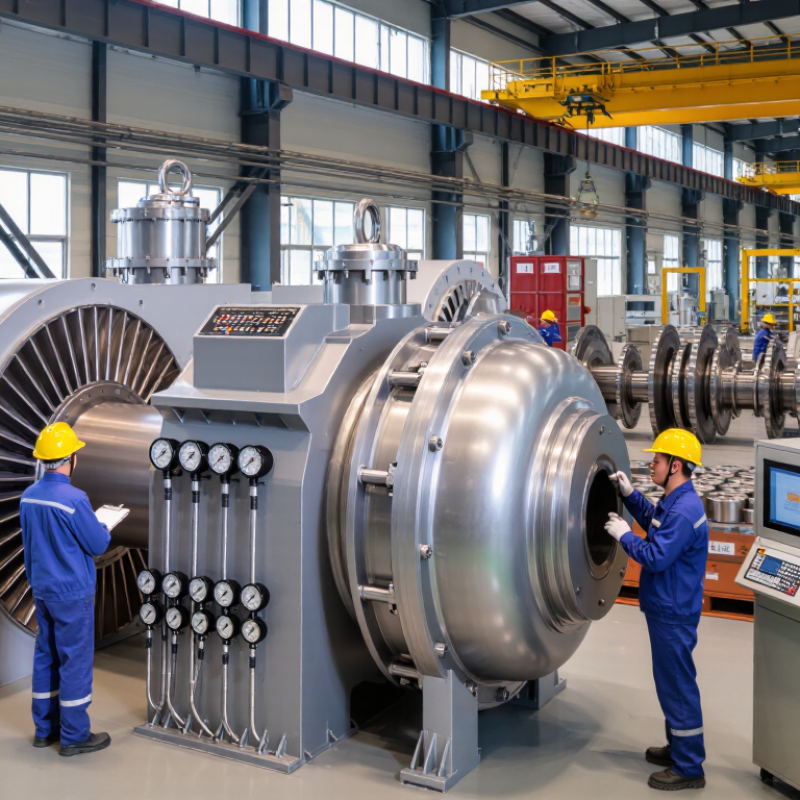
A China coal gas blower is an industrial fan designed to move coal-derived gas through gasification, coking, or gas-cleaning systems. It must handle fluctuating pressure, dust, moisture, and corrosive compounds. Unlike a general ventilation fan, its casing, shaft seals, impeller, and motor require process-specific engineering. Small losses matter.
The International Energy Agency’s Coal 2024 report states that China accounted for more than half of global coal consumption in 2023. This scale supports a large equipment market, but it also creates uneven supplier quality. A reliable supplier should provide verified airflow curves, pressure data, material specifications, vibration limits, and factory test records. Ask for operating references in comparable coal-gas conditions. Experience counts.
Supplier selection affects energy use, maintenance intervals, and operational stability. ISO 13349 emphasizes clear terminology and performance communication for fans, while ISO 1217 supports compressor and blower performance testing principles. These references help buyers compare evidence rather than attractive claims. Check whether the supplier calculates gas density at actual temperature and pressure. Some quotations ignore this detail. That can distort motor sizing and efficiency estimates. I would also inspect spare-parts availability, balancing records, sealing design, and technical support after commissioning. A low price may become expensive when shutdown access is poor.
How to Choose a Top China Coal Gas Blower Supplier?
A coal gas blower is selected according to its required flow rate, pressure, gas compatibility, safety protection, efficiency, and long-term serviceability. The chart presents a practical procurement weighting model for comparing suppliers without relying on company or brand data. Buyers should verify each criterion through technical drawings, performance curves, certification documents, factory testing, and after-sales support commitments.
Which Technical Specifications Define a Reliable Coal Gas Blower?
How to Choose a Top China Coal Gas Blower Supplier?
Which Technical Specifications Define a Reliable Coal Gas Blower?
A reliable coal gas blower starts with accurate operating data. Confirm the required flow rate, pressure rise, gas temperature, and operating altitude. The blower should maintain stable performance during normal and peak demand. Ask for a performance curve, not only a catalogue value. A neat table can still hide important limits.
Gas composition also matters. Dust, moisture, hydrogen, carbon monoxide, and corrosive compounds affect material selection. The casing and impeller should resist corrosion and erosion under actual conditions. Sealing design deserves close attention. Proper shaft seals help reduce leakage around continuous-duty equipment. However, no seal remains perfect without inspection and suitable maintenance.
Check motor power, starting torque, insulation class, and enclosure protection. An energy-efficient motor can reduce operating costs, but efficiency figures need test conditions. Request vibration limits, balancing records, noise data, and factory testing documents. Reliable suppliers should explain their measurement methods clearly. They should also provide spare-part dimensions and recommended inspection intervals. In practice, installation errors can undermine excellent equipment. Pipe alignment, foundation stiffness, and inlet conditions influence blower life significantly. Do not ignore these details. A supplier’s technical team should review drawings, clarify assumptions, and admit when the selected model needs adjustment. That honesty is often more valuable than an impressive specification sheet.
How to Evaluate a China Coal Gas Blower Supplier’s Manufacturing Quality?
When evaluating a China coal gas blower supplier, manufacturing quality deserves more attention than a polished catalog. A reliable supplier should explain each production stage clearly. Ask to inspect the workshop, machining area, assembly line, and testing zone. Look for clean workspaces, calibrated instruments, and organized material storage. Photographs are useful, but direct evidence is stronger. A polished factory tour can still mislead. Request material certificates, inspection records, and production traceability for key components. The details matter.
Quality begins with the impeller, shaft, housing, and sealing system. Inspect the steel grade and confirm whether incoming materials are tested. Check machining tolerances with actual measurement records, not verbal promises. For rotating equipment, dynamic balancing is essential for stable operation and reduced vibration. Welded housings should show consistent seams and controlled deformation. Do not accept vague quality claims. In practical supplier audits, small surface defects sometimes reveal weak process control. Some workshops focus heavily on appearance. That gap deserves attention.
A serious supplier should perform airflow, pressure, vibration, noise, and temperature tests before delivery. Ask for test data linked to the exact blower model and serial number. The report should identify instruments, test conditions, and acceptance criteria. Witness testing can reveal unstable readings or unusual noise. Check whether technicians understand coal gas operating conditions and maintenance risks. Reliable documentation also includes drawings, spare-part lists, and inspection procedures. After-sales engineering support should be specific, not promotional. If a supplier avoids factory questions, reconsider the evaluation. Leave room for doubt.
How to Compare Pricing, Customization, Delivery, and After-Sales Support?
When choosing a China coal gas blower supplier, compare more than the quoted unit price.
Request an itemized proposal covering the blower, motor, control cabinet, packaging, spare parts, inspection, and transport. A low price may exclude essential accessories. Check whether the quotation uses the same airflow, pressure, gas temperature, and operating hours. Otherwise, the comparison is not fair.
Customization should match your process, not merely your drawing.
Ask about impeller materials, sealing methods, explosion-protection requirements, noise limits, and variable-frequency control. An experienced supplier should explain design choices with calculations, test records, and similar operating data. Request a dimensional drawing before production. Small errors can delay installation. We once treated a standard inlet as interchangeable, and that assumption created unnecessary site work.
Delivery promises need measurable milestones.
Confirm drawing approval, manufacturing, factory testing, packing, and estimated shipping dates in writing. Ask how delays are reported and who handles damaged cargo. After-sales support deserves equal attention. Clarify warranty length, response time, remote troubleshooting, spare-parts availability, and technician support. A reliable supplier can provide manuals, wiring diagrams, commissioning guidance, and inspection videos. Ask for customer references where possible. Do not rely only on polished presentations. Real performance can vary, and every unanswered question should remain a purchasing concern.