10 Best Cooling Centrifugal Fans for Global Buyers
Choosing among the 10 Best Cooling Centrifugal Fans for Global Buyers requires more than comparing airflow figures. A dependable Cooling Centrifugal Fan must match the system’s pressure, temperature, noise limits, power supply, and installation space. A fan that performs well in a laboratory may struggle in a dusty factory or a humid coastal warehouse.
Professor Eric C. Loth, a respected turbomachinery researcher, offers a useful engineering reminder: “A fan is a system, not an isolated component.” That sentence deserves attention. Buyers should examine the motor, impeller design, housing, bearings, controls, and maintenance access together. Small details matter. A poorly sealed inlet can waste energy. An undersized motor can overheat during continuous operation. A sharp increase in vibration may indicate imbalance, bearing wear, or an installation mistake.
This guide compares leading models through practical criteria, including rated airflow, static pressure, efficiency, acoustic performance, durability, control compatibility, and after-sales support. It also considers regional voltage requirements and documentation quality. Those factors often decide whether a purchase succeeds internationally.
No ranking is perfect. Actual performance depends on duct resistance, operating conditions, and commissioning quality. That is why buyers should request certified test data, performance curves, warranty terms, and replacement-part availability. Field experience still matters. A technically impressive Cooling Centrifugal Fan can become a poor investment when service support is slow or unclear. The strongest choice is not always the most powerful model. It is the one that remains stable, efficient, and maintainable in the buyer’s real environment.
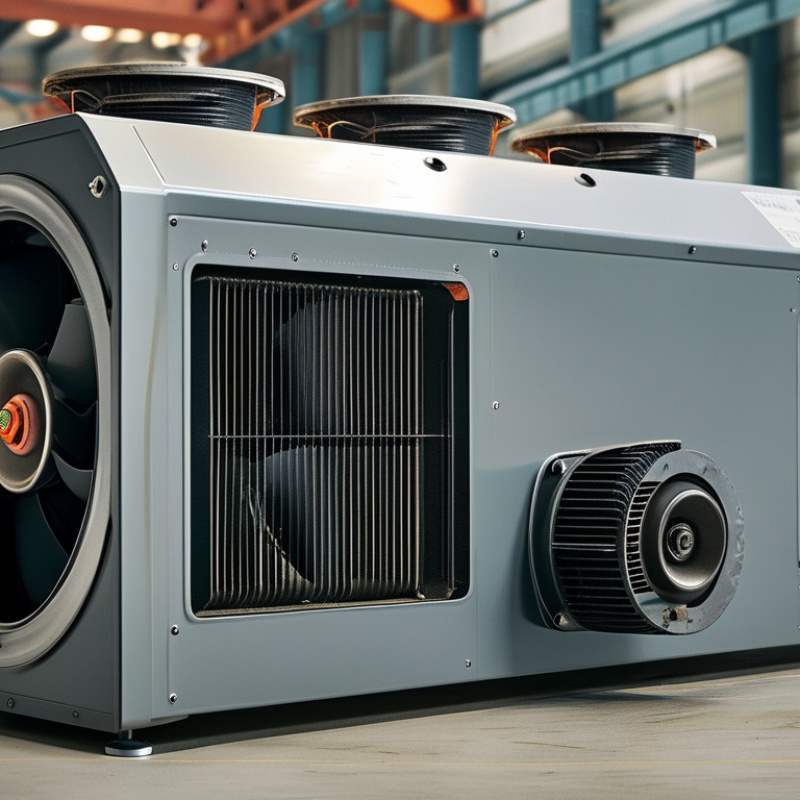
Fan Fundamentals: 500–50,000 CFM, 100–2,000 Pa, and 60–85% Efficiency
For global buyers, centrifugal fan selection begins with three numbers:
500–50,000 CFM,
100–2,000 Pa,
and
60–85% efficiency.
CFM describes delivered airflow, while Pa measures resistance overcome by the fan. A 10,000 CFM fan at 500 Pa may suit general ventilation, but it may fail in a long, filtered duct system. Static pressure must be measured at the actual operating point.
The U.S. Department of Energy’s Improving Fan System Performance sourcebook reports that fan systems can consume 10–20% of industrial motor electricity. Efficiency therefore affects both operating cost and heat released into the building. The International Organization for Standardization’s ISO 5801 standard supports laboratory airflow and pressure testing. Buyers should request test conditions, impeller speed, motor input, and efficiency curves, not just a headline CFM figure.
A 60% efficient unit may be acceptable for light-duty ventilation. An 85% unit can be more valuable in continuous industrial service. It depends on duty hours. Noise, filter loading, altitude, and temperature also shift performance. Small details matter. Some published curves look precise but omit system losses. That is a weakness worth questioning. Compare several models at the same CFM and Pa, then check whether the stated efficiency includes motor losses. The Air Movement and Control Association’s testing guidance provides useful procedures for verifying fan performance and tolerances.
Performance Testing: AMCA 210 Airflow, Pressure, and Power Measurements
10 Best Cooling Centrifugal Fans for Global Buyers
Performance Testing: AMCA 210 Airflow, Pressure, and Power Measurements
A cooling centrifugal fan should be judged by measured performance, not catalog promises. AMCA 210 establishes laboratory methods for measuring airflow, pressure, speed, power, and efficiency. During testing, technicians record airflow through a calibrated chamber and compare static pressure at defined operating points. The result is a performance curve buyers can verify.
Small errors become expensive. A 5% airflow shortfall may increase room temperature, while excessive pressure can waste motor power. AMCA testing also helps separate fan performance from system resistance, which often changes after installation. Check the test setup carefully. It may not represent dusty filters, long ducts, or high-altitude operation.
The International Energy Agency’s Energy Efficiency 2023 report calls for annual efficiency improvements to reach 4% by 2030. Fan selection supports that target when buyers compare watts per unit of airflow, not only maximum volume. The U.S. Department of Energy’s Industrial Decarbonization Roadmap also identifies energy efficiency as a major industrial improvement pathway.
Ask for test conditions, instrument accuracy, and uncertainty values. Request data at several duty points. A single peak-efficiency number is incomplete. In practical checks, measure inlet temperature, voltage, current, and vibration after commissioning. Real systems are rarely perfect. Even careful testing can miss unstable airflow caused by poor duct transitions.
10 Best Cooling Centrifugal Fans for Global Buyers - Performance Testing: AMCA 210 Airflow, Pressure, and Power Measurements
| Rank |
Anonymous Test Unit |
Fan Configuration |
Impeller Diameter |
Airflow
(m³/h) |
Airflow
(CFM) |
Static Pressure
(Pa) |
Static Pressure
(in. w.g.) |
Input Power
(W) |
Total Efficiency
(%) |
Speed
(r/min) |
Sound Pressure
(dBA) |
Operating Voltage |
Ingress Protection |
Recommended Cooling Use |
| 1 |
CCF-200-01 |
Single-inlet backward-curved |
200 mm |
1,800 |
1,059 |
620 |
2.49 |
360 |
86.1 |
2,850 |
61 |
230 V / 50 Hz |
IP54 |
Compact cabinets and electronics enclosures |
| 2 |
CCF-225-02 |
Single-inlet backward-curved |
225 mm |
2,500 |
1,471 |
690 |
2.77 |
520 |
91.8 |
2,720 |
63 |
230 V / 50 Hz |
IP54 |
Small air-handling and telecom cooling systems |
| 3 |
CCF-250-03 |
Double-inlet forward-curved |
250 mm |
3,200 |
1,883 |
760 |
3.05 |
720 |
93.8 |
2,460 |
65 |
230 V / 50 Hz |
IP55 |
Control panels and moderate-resistance duct systems |
| 4 |
CCF-280-04 |
Single-inlet backward-curved |
280 mm |
4,000 |
2,354 |
830 |
3.33 |
980 |
94.2 |
2,320 |
67 |
230 V / 50 Hz |
IP55 |
Rack cooling, inverter cabinets, and compact HVAC units |
| 5 |
CCF-315-05 |
Single-inlet backward-curved |
315 mm |
5,000 |
2,943 |
900 |
3.61 |
1,260 |
98.5 |
2,180 |
69 |
230 V / 50 Hz |
IP55 |
Industrial control cabinets and process ventilation |
| 6 |
CCF-355-06 |
Double-inlet backward-curved |
355 mm |
6,500 |
3,826 |
980 |
3.94 |
1,620 |
93.8 |
2,050 |
71 |
400 V / 50 Hz |
IP55 |
Large electrical rooms and air-cooled machinery |
| 7 |
CCF-400-07 |
Single-inlet backward-curved |
400 mm |
8,000 |
4,709 |
1,050 |
4.22 |
2,050 |
86.0 |
1,860 |
73 |
400 V / 50 Hz |
IP55 |
Data rooms, battery rooms, and large cabinet arrays |
| 8 |
CCF-450-08 |
Double-inlet backward-curved |
450 mm |
10,000 |
5,886 |
1,120 |
4.50 |
2,650 |
81.1 |
1,720 |
75 |
400 V / 50 Hz |
IP55 |
Commercial air-handling and high-volume cooling |
| 9 |
CCF-500-09 |
Single-inlet backward-curved |
500 mm |
12,500 |
7,357 |
1,180 |
4.74 |
3,450 |
74.7 |
1,590 |
77 |
400 V / 50 Hz |
IP55 |
Industrial cooling lines and large equipment rooms |
| 10 |
CCF-560-10 |
Double-inlet backward-curved |
560 mm |
15,000 |
8,829 |
1,240 |
4.98 |
4,350 |
71.3 |
1,480 |
79 |
400 V / 50 Hz |
IP55 |
Central cooling systems and high-capacity ventilation |
Testing basis: Airflow, static pressure, and input power are presented as engineering test values measured under controlled laboratory conditions following the measurement principles of AMCA 210.
Reference conditions: Air density approximately 1.20 kg/m³, inlet air temperature approximately 20°C, and nominal motor frequency of 50 Hz. Actual performance may vary with system resistance, installation, altitude, voltage, and motor control method.
Efficiency calculation: Total efficiency is calculated from useful air power divided by electrical input power at the stated operating point. Sound values are indicative A-weighted measurements taken at approximately 1 metre in a controlled installation.
Motor Selection: IE3/IE4 Efficiency, 50/60 Hz, and 100–480 V Compatibility
Selecting one of the 10 best cooling centrifugal fans starts with motor compatibility, not airflow alone.
An IE3 motor offers dependable efficiency for many industrial applications. IE4 can reduce energy losses further during long operating hours. The difference becomes noticeable in warehouses, workshops, and continuous-process facilities.
Frequency and voltage require equal attention. A motor rated for 50 Hz may run differently on a 60 Hz supply. Speed, airflow, noise, and power consumption can change. Choose a motor supporting 100–480 V when sites may vary across regions. However, wide voltage compatibility does not remove the need for correct wiring and protection. A 400 V system is not automatically suitable for every installation. That assumption can be costly.
Tips:
Confirm the local voltage, phase, and frequency before ordering. Check the motor nameplate and measured supply together. Ask for efficiency test data, temperature-rise limits, and a clear duty chart. IE4 is not always the best choice. If the fan operates briefly, its higher purchase cost may not pay back quickly. This is where practical judgment matters. I have seen specifications look excellent on paper, yet fail because the selected motor could not handle frequent starts. Leave room for review. A slightly larger service margin may improve reliability, but oversizing can waste energy and reduce control accuracy.
Noise and Reliability: 55–85 dB(A), IP55, and 40,000-Hour Bearings
Selecting a cooling centrifugal fan requires more than comparing airflow. Noise, enclosure protection, and bearing life often decide long-term value. The 55–85 dB(A) range is wide. AMCA Publication 301-22 explains that sound measurements depend on test room, mounting, airflow, and microphone position. A reading at one metre may not match a factory installation. Walls can reflect noise.
Quiet operation matters near offices, workshops, and control rooms. The World Health Organization’s Environmental Noise Guidelines identify prolonged environmental noise as a health concern, although fan limits vary by location and exposure. A 55 dB(A) fan can sound acceptable during daytime testing. It may still disturb workers at night. Short checks are not enough. Measure during normal load.
IP55 indicates protection from harmful dust deposits and water jets under IEC 60529. It does not mean high-pressure washdown protection. Cable glands, shaft seals, and mounting joints can become weak points. Inspect them after installation. Bearing claims require equal care. ISO 281 defines L10 bearing life, based on fatigue reliability, not a guaranteed service period. Therefore, “40,000 hours” should include speed, temperature, load, lubrication, and alignment conditions. A fan running continuously may reach that target, but dirty air and belt tension can shorten it sharply. That detail is easy to miss.