Leave Your Message

7 Best Dust Centrifugal Fans for Industrial Dust Collection

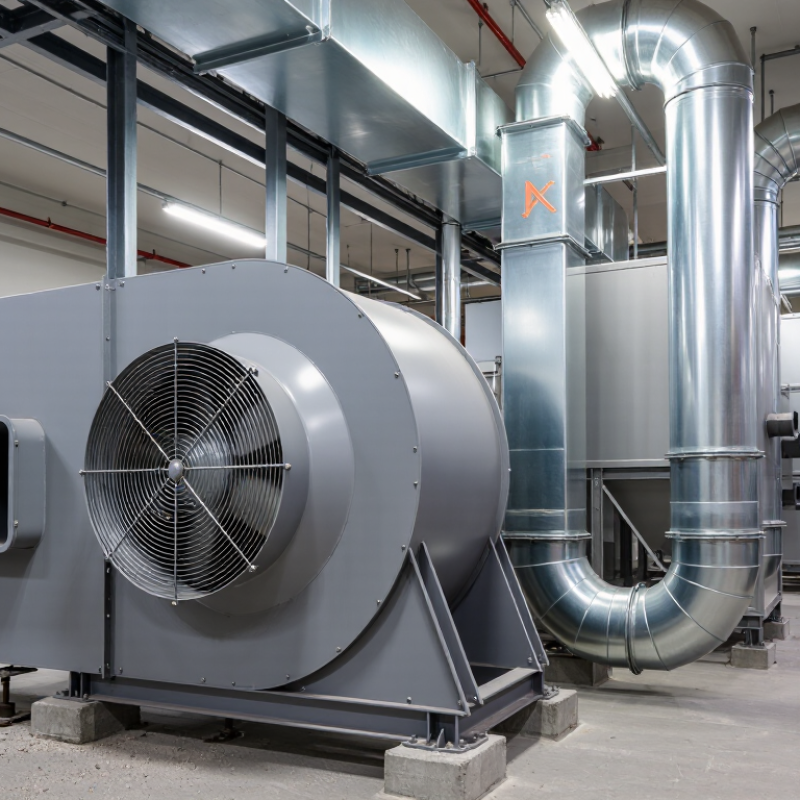
Industrial dust collection is no place for guesswork. A properly selected Dust Centrifugal Fan can keep production areas cleaner, protect workers, and stabilize airflow across long duct runs. It must also handle abrasive particles, changing system resistance, and possible combustible-dust hazards.

OSHA’s Combustible Dust National Emphasis Program recorded 281 incidents, 119 fatalities, and 718 injuries between 1980 and 2005. These figures remain a serious warning. NFPA 652 also requires facilities to evaluate fire and explosion risks from combustible particulate solids. Fan selection therefore involves more than horsepower. Impeller design, air volume, static pressure, material strength, spark resistance, and maintenance access all matter.

Industrial ventilation researcher Dr. David Leith has emphasized, “The best control is local exhaust ventilation at the source.” That principle explains why a powerful fan cannot repair poorly positioned hoods or leaking ducts. It sounds obvious. It is often missed.

The seven fans reviewed in this guide represent different industrial priorities. Some favor high pressure for dense duct networks. Others suit lighter dust, continuous operation, or corrosive environments. Technical data from the U.S. National Institute for Occupational Safety and Health supports source capture and properly designed local exhaust systems. Still, laboratory ratings do not perfectly match a dusty factory floor. Real performance changes with filter loading, moisture, duct elbows, and operator habits. That is where many comparisons become imperfect.

Before purchasing, measure the system carefully. Confirm the required airflow and static pressure. Then verify construction, certification, noise, service support, and dust compatibility. A reliable Dust Centrifugal Fan should move air consistently, not merely look powerful on a product sheet.
7 Best Dust Centrifugal Fans for Industrial Dust Collection

What Makes a Dust Centrifugal Fan Suitable for Industrial Collection

A suitable dust centrifugal fan must handle heavy particles without losing stable airflow. It should deliver enough volume against the system’s actual static pressure. Not just airflow.

Dust loading changes as filters fill, ducts collect residue, and production rates rise. A fan selected from clean-air data may struggle during a busy shift. Experienced engineers check airflow, pressure, temperature, and dust characteristics together.

Industrial dust can be abrasive, sticky, hot, or unusually fine. An appropriate impeller needs strong, balanced blades and a housing that resists erosion. Smooth internal surfaces reduce buildup around the inlet and discharge. Sealed bearings, accessible inspection doors, and effective shaft protection also support safer maintenance. Small leaks can reduce collection performance and pull dusty air into the workspace.

Selection should include duct length, elbows, filter resistance, and fan speed. Motor capacity matters too. Energy use matters. A high-pressure fan may solve one problem while creating unnecessary operating costs. Variable-speed control can match airflow to production demand, but only when controls are correctly adjusted. In real facilities, clean calculations sometimes miss changing dust behavior. Measuring airflow after installation provides a more reliable check. Operators should also inspect vibration, unusual noise, and dust deposits around joints. These signs may reveal imbalance, blockage, or poor system sealing before performance drops.
Key Performance Factors for Comparing Dust Collection Fans

7 Best Dust Centrifugal Fans for Industrial Dust Collection

Key Performance Factors for Comparing Dust Collection Fans

Selecting a dust centrifugal fan requires more than comparing motor horsepower. Airflow and static pressure must match the complete collection system. A fan moving 12,000 cubic feet per minute may perform poorly when duct resistance rises. Check the fan curve at the actual operating pressure, not at its free-air rating. Small errors here can leave visible dust on beams, ledges, and machine surfaces.

Impeller design also affects reliability. Radial blades usually handle heavier dust loads and tolerate occasional debris better. Forward-curved designs may deliver strong airflow, but they can overload motors as resistance changes. Measure noise, vibration, and motor current during a real production shift. Short tests can hide problems. Temperature matters too, especially near furnaces or drying equipment. Use materials suited to abrasion, moisture, and the dust’s particle size.

Energy use deserves close attention. A fan operating far from its best efficiency point can waste power every hour. Compare brake horsepower, expected airflow, pressure stability, and maintenance intervals together. Inspect access doors, bearings, belts, and impeller surfaces before purchase. Certified performance data improves confidence, but field conditions may still differ. That is the uncomfortable part. Duct leaks, clogged filters, and poor hood placement can distort even excellent fan specifications. Document readings after installation, then review them when filters begin loading.

Seven Industrial Dust Centrifugal Fan Types and Their Applications

Seven Industrial Dust Centrifugal Fan Types and Their Applications

Industrial dust collection needs more than airflow. It needs the correct blade design, pressure range, and material resistance. Radial-blade fans suit heavy chips and coarse dust. Backward-inclined fans support general filtration with lower energy demand. Backward-curved fans work well in clean-side systems. Airfoil fans serve high-volume, low-dust ventilation. Forward-curved fans fit compact, lower-pressure equipment. High-pressure paddle-wheel fans handle dense dust and long duct runs. Abrasion-resistant radial fans suit sand, mineral, and metal particles. Each type behaves differently when filters load. That detail is easy to overlook.

Tips: Confirm airflow at dirty-filter conditions. Check static pressure, particle size, temperature, and moisture. Use a test port near the collector outlet. A clean-filter reading can mislead.

The International Energy Agency reports that electric motor systems consume roughly half of global electricity. Fan efficiency therefore affects operating cost, not only capture performance. EPA AP-42 guidance also shows that particulate control depends on particle size, collection design, and operating conditions. A fan may meet its catalog airflow but still miss the hood capture target. Plant audits often find leaking duct joints before finding a fan fault. I would also challenge one common assumption: higher pressure is not automatically better. It can increase noise, power use, and filter stress. Select from measured system resistance, then verify performance after installation.

7 Best Dust Centrifugal Fans for Industrial Dust Collection

Typical static-pressure capability by centrifugal fan type. Values represent commonly specified industrial design ranges and are intended for preliminary comparison; final selection depends on airflow, particle loading, temperature, filtration, and system resistance.

Radial-blade and high-pressure radial fans are generally preferred for abrasive, high-dust, or high-resistance systems. Backward-inclined, backward-curved, and airfoil fans are commonly used where energy efficiency and stable operation are priorities. Forward-curved fans suit lower-pressure, cleaner-air applications, while radial-tip designs provide a balance of pressure capability and material-handling resistance.

How to Select the Right Fan for Dust, Airflow, and System Pressure

Selecting a dust centrifugal fan begins with the dust, not the fan catalog. Identify particle size, moisture, temperature, abrasiveness, and combustible-dust potential. A fine powder behaves differently from wood chips or metal shavings. ACGIH’s Industrial Ventilation guidelines commonly place ordinary-dust transport velocities near 3,500–4,000 feet per minute. The correct value depends on the material and duct layout.

Measure airflow at the pickup points, then calculate total system pressure. Include hood entry loss, duct friction, elbows, filters, dampers, and discharge resistance. ASHRAE Handbook methods support pressure-loss calculations, while AMCA Publication 203 explains how fan speed changes airflow and pressure. A fan rated at 10,000 cubic feet per minute may fail when the filter loads with dust. That detail is easy to miss.

Safety requires more than airflow. NFPA 652 recommends a documented dust hazard analysis when combustible dust may be present. Fan construction, spark resistance, grounding, isolation, and explosion protection must match the assessed hazard. OSHA technical guidance also stresses adequate capture and transport velocity. Do not select only by horsepower. A larger motor cannot repair poor duct design. A neat calculation can still be wrong. Recheck the system after installation, because real filters clog, dampers shift, and operators modify pickup points. The first selection may need revision.

Installation, Maintenance, and Safety Considerations for Long-Term Use

Choosing among the seven best dust centrifugal fans requires more than comparing airflow ratings. Installation conditions often decide long-term performance. Place the fan close to the collection point when practical. Keep duct runs short, smooth, and properly supported. Sharp bends increase resistance and reduce capture efficiency. A rigid base helps prevent vibration from spreading through the building.

Before startup, verify the impeller rotates freely and the motor matches the available power supply. Install guards over exposed moving parts. Ground the fan, ductwork, and collector to control static buildup. Combustible dust requires equipment and protection measures suitable for that hazard. Follow local codes and the manufacturer’s installation instructions. A rushed connection can create years of maintenance trouble.

In field maintenance, I inspect belts, bearings, fasteners, and flexible connections each week. Listen for new rattling, scraping, or uneven motor noise. Check airflow with a gauge rather than relying only on sound. Clean dust deposits before they harden around the housing or motor. Replace damaged seals quickly; small leaks can weaken collection at distant workstations. Keep a written log of vibration, temperature, and filter pressure readings. A common mistake is extending service intervals during busy production periods. I have done it too, and the later repair usually costs more. Stop the fan before cleaning, lock out energy sources, and confirm zero movement. Never reach into a running housing, even for a minor adjustment.

7 Best Dust Centrifugal Fans for Industrial Dust Collection - Installation, Maintenance, and Safety Considerations for Long-Term Use

Fan Type Recommended Dust-Collection Duty Typical Airflow Range Typical Static Pressure Impeller Configuration Common Construction Installation Considerations Maintenance Requirements Key Safety Considerations Long-Term Use Profile
Heavy-Duty Radial-Blade Fan Coarse wood chips, metal shavings, abrasive particles, and high-solids conveying. 3,000–30,000 CFM 8–20 in. w.g. Open radial blades with high-impact tolerance. Carbon steel housing; abrasion-resistant liner or hard-faced impeller for severe service. Use a rigid base, flexible connectors, adequate inlet clearance, and properly sized duct transitions. Anchor the fan to limit vibration. Inspect blade edges, liners, bearings, belt tension, and accumulated material at least monthly in heavy service. Install guarding on belts and couplings. Bond and ground the system, especially when handling combustible dust. Excellent for rugged applications where impact resistance is more important than maximum energy efficiency.
Backward-Inclined Fan General industrial dust collection, woodworking dust, plastic dust, and clean-to-moderately dirty air. 2,000–50,000 CFM 4–14 in. w.g. Backward-inclined blades with non-overloading power characteristics. Painted or galvanized steel; stainless steel may be selected for corrosive environments. Provide straight duct sections where practical, avoid abrupt elbows at the inlet, and verify that the motor matches the operating point. Check wheel balance, bearings, shaft alignment, belt condition, and pressure readings on a scheduled basis. Use a motor overload device and verify rotation before connecting the fan to the full duct system. A strong all-purpose choice offering good efficiency, stable operation, and moderate resistance to dust buildup.
High-Pressure Radial-Tip Fan Long duct runs, compact systems, high-resistance filters, and applications requiring elevated pressure. 1,500–20,000 CFM 10–25 in. w.g. Radial-tip blades designed for high pressure and relatively low dust accumulation. Heavy-gauge steel with reinforced housing and abrasion-resistant wear areas. Calculate total system resistance, including filters and separators. Install a pressure gauge or transmitter to monitor operating conditions. Monitor vibration and bearing temperature; inspect the impeller for erosion and check filter pressure drop regularly. Do not operate beyond the rated speed. Use lockout/tagout before opening inspection doors or entering the fan housing. Suitable for demanding systems, but usually consumes more energy than a lower-pressure fan at the same airflow.
Spark-Resistant Centrifugal Fan Aluminum, magnesium, chemical, grain, and other dust applications where ignition risk must be reduced. 1,000–25,000 CFM 3–12 in. w.g. Non-sparking material combinations and controlled clearances. Aluminum or other specified non-ferrous components, with compatible steel structural parts where permitted by the risk assessment. Confirm the dust hazard classification, electrical area classification, grounding method, and required explosion-control measures before installation. Inspect clearances, wheel condition, bonding connections, bearings, and dust deposits more frequently than in ordinary service. A spark-resistant fan alone does not eliminate explosion risk. Use appropriate explosion venting, suppression, isolation, and housekeeping controls. Best used as one component of a complete combustible-dust protection program designed to applicable local standards.
High-Temperature Centrifugal Fan Hot process dust, furnace exhaust, thermal treatment, drying systems, and elevated-temperature conveying. 2,000–40,000 CFM 4–15 in. w.g. Backward-inclined or radial blades selected for temperature and particle loading. Heat-resistant carbon steel or stainless steel; insulated housing and high-temperature bearings may be required. Provide thermal expansion allowance, flexible connections, heat shielding, and adequate cooling around bearings and the motor. Record bearing temperatures and vibration. Inspect expansion joints, insulation, impeller distortion, and thermal fatigue. Install high-temperature interlocks and a controlled cooldown procedure. Prevent personnel contact with hot surfaces. Reliable for hot service when material limits, cooling requirements, and thermal expansion are correctly engineered.
Corrosion-Resistant Centrifugal Fan Chemical vapors, corrosive dust, fertilizer processing, food-processing atmospheres, and humid exhaust. 1,000–30,000 CFM 2–10 in. w.g. Backward-curved or radial blades selected to limit buildup and resist chemical attack. Stainless steel, coated steel, fiberglass-reinforced plastic, or another material compatible with the process chemistry. Verify chemical compatibility, drainage, condensate control, access for washing, and separation between the fan and incompatible metals. Check coating condition, corrosion at welds, drain points, seals, bearings, and impeller balance after cleaning. Use suitable chemical-resistant PPE, ventilation, isolation procedures, and corrosion-compatible fasteners and electrical components. Provides long service life only when the fan materials are matched to the actual chemical concentration, temperature, and moisture level.
Compact Direct-Drive Centrifugal Fan Small workshops, localized capture hoods, laboratory dust collection, and space-limited installations. 500–8,000 CFM 2–8 in. w.g. Backward-curved or radial blades mounted directly to the motor shaft. Compact steel housing with sealed motor bearings and optional corrosion-resistant finishes. Maintain motor cooling clearance, provide service access, support connected ductwork independently, and avoid excessive inlet restriction. Clean the wheel and inlet, inspect electrical connections, check vibration, and verify filter condition at least quarterly. Disconnect and isolate power before cleaning. Confirm that collected dust cannot contact hot motor surfaces or electrical terminals. Low-maintenance and space-efficient, although speed changes generally require a compatible motor controller or a different impeller selection.
Selection and safety note: Actual airflow and pressure depend on duct length, fittings, hood design, filter loading, particle density, temperature, and elevation. Final fan selection should be verified against a system resistance calculation and the applicable local electrical, fire, combustible-dust, and occupational-safety requirements.