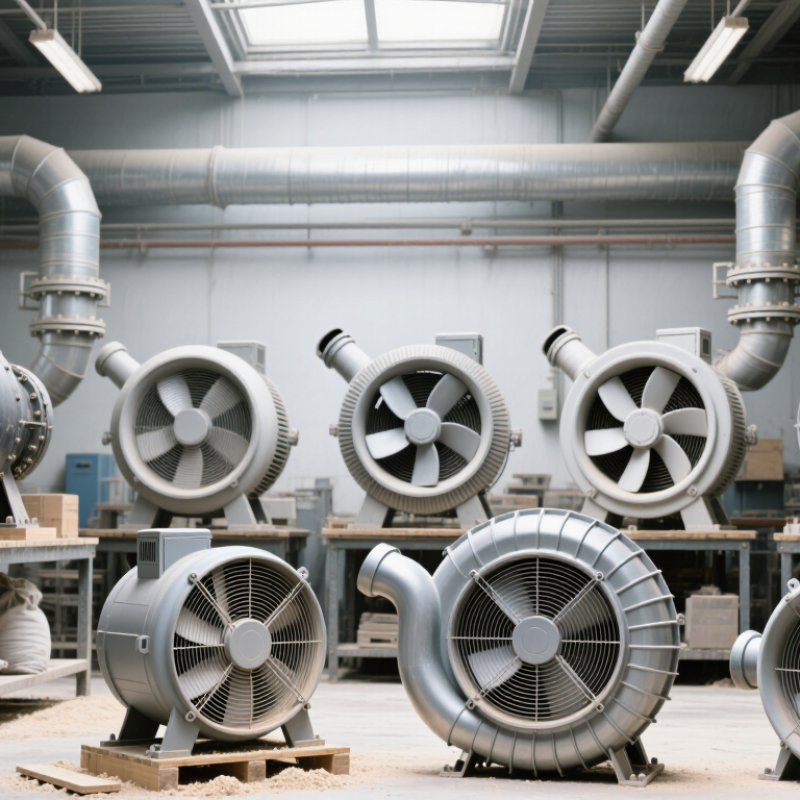
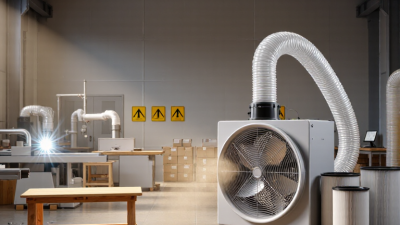
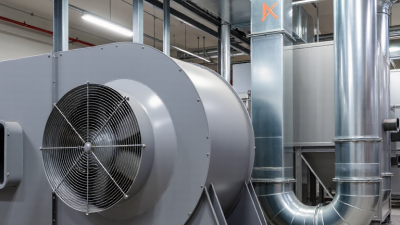
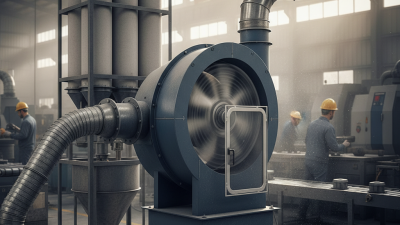
Choosing the right Dust Centrifugal Fan is not a simple matter of selecting the largest motor. Dust density, particle size, moisture, temperature, and abrasion can change the entire design decision. A woodworking workshop may need a compact radial-blade fan for chips, while a cement plant may require a heavy-duty, wear-resistant unit for dense mineral dust. Small details matter. Even duct bends matter.
David Mills, author of Pneumatic Conveying Design Guide, explains, “The fan is the heart of a pneumatic conveying system.” This observation remains highly practical. A poorly matched fan can create weak capture, excessive noise, unstable airflow, or rapid impeller wear. The best Dust Centrifugal Fan balances airflow, static pressure, efficiency, durability, and maintenance access. It should also suit the dust collector, filters, ductwork, and operating environment.
This guide examines ten important types, including radial-blade, backward-curved, forward-curved, high-pressure, induced-draft, explosion-resistant, and wear-resistant designs. Some categories overlap, which makes a perfect ranking difficult. That is worth admitting. A fan described as “high pressure” may also use radial blades and abrasion-resistant construction. Performance curves can look convincing, yet field conditions often expose hidden weaknesses. Dust buildup, leaking joints, and neglected bearings can quietly reduce capacity.
The practical question is not, “Which fan is strongest?” It is, “Which fan remains reliable under the actual dust load?” This introduction provides a clear starting point for comparing those ten types, their applications, benefits, limitations, and selection considerations.
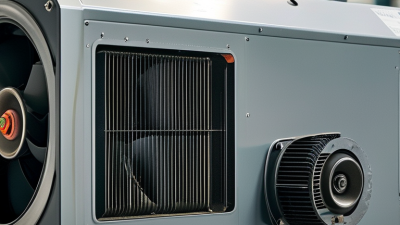
A dust centrifugal fan is an industrial air-moving machine designed to remove dust, chips, fibers, and fine particles from a workspace. Unlike a simple axial fan, it changes airflow direction by roughly 90 degrees. Air enters through the impeller eye, then rotating blades accelerate it outward. The curved housing converts part of that velocity into pressure. This pressure pushes contaminated air through ducts, collectors, or exhaust outlets.
Its performance depends on more than motor power. Radial-blade, backward-curved, forward-curved, high-pressure, abrasive-duty, spark-resistant, dust-collection, material-handling, high-temperature, and compact centrifugal fans serve different conditions. Radial blades often tolerate heavier particles, while backward-curved designs can operate efficiently with cleaner air. Abrasive dust may wear the impeller quickly. Moist particles can also cause buildup and imbalance.
Tips: Check airflow, static pressure, particle size, temperature, and duct length before selecting a fan. Inspect the impeller regularly for coating, cracks, or uneven wear. Keep access doors sealed, but make maintenance practical. A filter that looks clean may still restrict airflow. In practice, calculations are rarely perfect. Field measurements often reveal unexpected resistance. Good selection combines manufacturer data, site experience, and scheduled inspections.
Dust centrifugal fans use a rotating impeller to accelerate air and convert rotational energy into airflow pressure. The relative suitability scores below reflect common design characteristics for handling dust-laden air, not manufacturer ratings.
How to read the chart: Radial-blade, paddle-wheel, material-handling, and abrasion-resistant designs generally tolerate heavier or more abrasive dust better because their open impeller passages reduce clogging and wear. Airfoil and backward-curved designs can provide higher efficiency in cleaner air but usually require better filtration when dust loading is high.
Dust centrifugal fans are classified by blade design, pressure capability, and working environment. Radial-blade fans handle coarse particles well. Backward-curved fans save energy during steady operation. Backward-inclined fans offer stable airflow and moderate dust resistance. Airfoil fans are efficient, but they suit cleaner air streams better. Forward-curved fans deliver high airflow at lower pressure. Their narrow passages may clog.
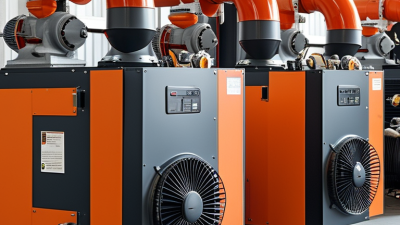
Application changes the selection. High-pressure dust fans serve long ducts and dense filter systems. Wear-resistant fans use reinforced housings for sand, metal shavings, or mineral dust. Spark-resistant fans support processes where friction control matters. Dust-collection fans connect with bag filters, cyclones, or cartridge collectors. Process-exhaust fans remove hot fumes from kilns, ovens, and production lines. These ten types often overlap. A wear-resistant radial fan is both a design choice and an application solution.
Particle size, moisture, temperature, and duct length must be checked before ordering. A fan moving dry wood dust may fail quickly with wet fibers. Small particles can still damage an impeller at high velocity. Field measurements should include static pressure, airflow, motor load, and filter resistance. Specifications sometimes look precise, yet real systems behave differently. That is where careful testing matters. One overlooked elbow can change the result. Regular inspection should examine vibration, casing wear, bearing temperature, and dust buildup around the inlet.
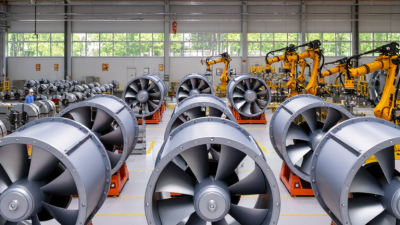
Dust centrifugal fans are selected by impeller design, pressure demand, and particle behavior. The ten most practical types include radial-blade, backward-curved, backward-inclined, airfoil, forward-curved, paddle-wheel, open radial, high-pressure radial, abrasion-resistant, and material-handling fans. Radial-blade models suit heavy dust and moderate pressure. Paddle-wheel designs tolerate larger debris. Backward-curved and airfoil fans usually provide better efficiency when particles are fine and filtration is effective. Forward-curved fans deliver high airflow at lower pressure, but they can foul quickly in dirty systems.
Selection must match the dust, ductwork, and operating hours. A cement transfer line may need an abrasion-resistant radial impeller. A woodworking collector may perform better with a material-handling or paddle-wheel design. High-pressure radial fans support long ducts and dense filters. They consume more energy when poorly controlled. The U.S. Department of Energy’s fan-system guidance identifies typical energy-saving opportunities of 10% to 20% through better sizing, controls, and maintenance. That figure deserves attention. Oversizing remains common.
AMCA testing principles emphasize verified airflow, pressure, power, and sound performance. These values matter more than catalog names. A 2023 industrial fan market assessment by Grand View Research estimated the global market at several billion U.S. dollars, reflecting broad industrial demand. However, market growth does not guarantee correct dust performance. My practical concern is simple: a fan that moves air in a clean test room may fail beside a clogged filter. Inspectors should check impeller buildup, vibration, bearing temperature, and actual static pressure. Dust changes. Fan choices should be reviewed too.
Dust centrifugal fans are not interchangeable. Their blade shape, pressure curve, and dust-handling ability determine where they work best. Ten commonly specified types include radial-blade, radial-tip, backward-curved, backward-inclined, airfoil, forward-curved, paddle-wheel, high-pressure, wear-resistant, and dust-collection fans. Radial and paddle-wheel designs handle heavy particles well, while airfoil and backward-curved fans usually deliver better efficiency in cleaner air. Forward-curved models suit compact systems, but their pressure range is more limited.
High-pressure fans support long ducts, dense filters, and resistance-heavy processes. Wear-resistant fans use stronger internal surfaces for abrasive dust, though they may cost more energy. Dust-collection fans are selected for stable transport and controlled airflow. In my experience, a fan that performs well during testing can still struggle after filters load with dust. Real conditions matter. Noise, vibration, leakage, temperature, and particle size should be checked together. A small mistake in system resistance can reduce airflow sharply.
Tips: Match the fan to dust density, moisture, temperature, duct length, and required pressure. Ask for a performance curve, not only an airflow number. Inspect the impeller after initial operation. Unusual vibration often signals imbalance, buildup, or poor alignment. Also, do not assume the most powerful fan is the best choice. That assumption is common, and sometimes costly. A careful site measurement remains more reliable than a catalog estimate.
Selecting a dust centrifugal fan starts with the dust, not the catalogue. Identify particle size, temperature, moisture, density, and required airflow. Fibrous dust needs a wider passage, while fine mineral dust may require a stronger, wear-resistant impeller. Consider these differences when comparing the ten common fan types, including radial-blade, backward-curved, high-pressure, and explosion-resistant designs.
Measure the duct length, bends, filters, hoppers, and discharge points before choosing pressure. A fan that moves enough air but lacks pressure will leave dust around the workstation. Select a motor with suitable power and check the operating point against the system curve. I have seen installations fail because pressure loss through a dirty filter was ignored. That mistake is avoidable.
Install the fan on a rigid, level base with flexible connectors at the inlet and outlet. Keep access space around bearings, belts, inspection doors, and cleaning panels. Align the shaft carefully, then check rotation before connecting the full duct system. During maintenance, inspect vibration, bearing temperature, belt tension, impeller buildup, and unusual noise. Record readings weekly at first. Small changes matter. Shut down and isolate power before opening any panel. Replace worn parts promptly, but review the cause of wear as well. Poor duct alignment, abrasive particles, or excessive speed may be responsible. A maintenance schedule should match actual dust loading, not an optimistic calendar.
| Rank | Dust Centrifugal Fan Type | Blade or Wheel Design | Typical Dust-Handling Application | Airflow and Pressure Characteristics | Key Selection Considerations | Installation Requirements | Maintenance Priorities |
|---|---|---|---|---|---|---|---|
| 1 | Radial-Blade Fan | Straight blades extend radially from the wheel hub. The open design provides a relatively wide passage for particulate matter. | General dust collection, woodworking dust, material conveying, furnace exhaust, and systems containing moderate to heavy particulate loads. | High static-pressure capability with moderate airflow. It is less sensitive to dust buildup than many narrow-blade designs. | Select a wear-resistant wheel when the dust is abrasive. Check the required airflow, total system resistance, particle size, and operating temperature. | Install with a correctly sized inlet and outlet duct. Use flexible connectors, a solid foundation, vibration isolation, and an access door for inspection. | Inspect blades for erosion and buildup, clean the wheel without changing its balance, and check bearings, belts, guards, and fasteners regularly. |
| 2 | Radial-Tip Fan | Blades are arranged radially or with a radial tip, combining an open wheel passage with a high-speed blade periphery. | Dust collection systems that require higher pressure, pneumatic conveying, and applications with moderately abrasive particles. | High pressure with good resistance to performance loss caused by moderate dust accumulation. | Verify the fan curve at the actual operating speed. Consider tip speed, material hardness, erosion protection, and motor starting torque. | Keep the inlet free from sharp elbows placed too close to the fan. Provide an expansion joint where thermal movement or vibration may occur. | Monitor vibration and wheel balance. Check the blade tips and housing for rubbing, erosion, or deformation. |
| 3 | Backward-Inclined Fan | Blades lean away from the direction of wheel rotation. The design is commonly used where relatively high efficiency is required. | Cleaner dust streams, central dust collection systems, HVAC exhaust with filtration, and process ventilation after effective separation. | Efficient operation with moderate-to-high pressure and a comparatively stable power curve. | Use it when energy efficiency is important and the dust load is controlled. Avoid untreated heavy or sticky dust unless the wheel is specifically designed for it. | Provide straight duct sections where practical and avoid abrupt inlet disturbances. Align the shaft and connect the motor according to the manufacturer’s instructions. | Keep filters and ducts from becoming blocked, because increased system resistance can reduce airflow. Inspect the wheel for deposits and imbalance. |
| 4 | Airfoil-Blade Fan | Streamlined hollow or formed blades are shaped like airfoils to reduce aerodynamic losses. | Large-volume ventilation and dust systems in which the dust is already filtered or has a low concentration of coarse particles. | High efficiency and high airflow at moderate-to-high pressure, generally with lower operating noise than less streamlined wheels. | Do not select it for heavy, sticky, fibrous, or highly abrasive dust unless the specific wheel construction is rated for that service. | Use clean, well-designed inlet ductwork and adequate access for cleaning. Install filters or separators upstream when dust could enter blade cavities. | Inspect for hidden deposits, corrosion, and blade damage. Verify balance carefully because small deposits can affect a high-efficiency wheel. |
| 5 | Forward-Curved Fan | Many narrow blades curve in the direction of wheel rotation. The compact wheel can provide substantial airflow at relatively low speed. | Low-pressure ventilation and filtered air-handling applications where the dust concentration is low and compact equipment is useful. | High airflow at low-to-moderate pressure. Power demand can rise rapidly if the fan operates beyond its design point. | Use only when the dust is light and the air is reasonably clean. Confirm motor overload protection and the operating point on the fan curve. | Install downstream filtration and protect the wheel from coarse particles. Ensure the rotating assembly is enclosed and properly guarded. | Clean blades and filters frequently. Check motor current, belt tension, bearing temperature, and signs of wheel loading. |
| 6 | Paddle-Wheel or Open-Blade Fan | Wide, simple blades create a large open passage and tolerate irregular or fibrous material better than closely spaced blades. | Wood chips, textile fibers, paper trim, agricultural residues, and dust streams containing larger lightweight particles. | Moderate pressure with reliable material passage and comparatively low risk of clogging. | Match the inlet opening and wheel passage to the largest expected particle. Consider spark control and wear protection for dry combustible materials. | Use a smooth transition into the inlet and provide cleanout access. Prevent foreign objects from entering the wheel with suitable screens or separators. | Remove wrapped fibers and accumulated material. Inspect blades for bending, cracks, wear, and balance changes. |
| 7 | High-Pressure Turbo Fan | A compact, enclosed impeller with backward-curved or radial-style blades is optimized for higher pressure generation. | Long duct systems, cartridge-filter resistance, fume extraction, pneumatic conveying, and compact process equipment. | High static pressure with low-to-moderate airflow compared with larger industrial dust collectors. | Calculate duct friction, filter pressure drop, elbows, dampers, and conveying velocity. Confirm that the motor can handle the required pressure and flow. | Use rigid supports and vibration isolation. Install pressure measurement points before and after filters to identify system restriction. | Check inlet filters, impeller clearance, motor current, bearing condition, and pressure readings. Clean the impeller if efficiency declines. |
| 8 | Abrasive-Duty Wear-Resistant Fan | A radial or radial-tip wheel is reinforced with thicker sections, replaceable liners, hardened surfaces, or other erosion-resistant construction. | Mineral dust, sand, cement dust, metal-processing particles, ash, and other abrasive industrial exhaust streams. | Pressure and airflow depend on the wheel geometry, but the construction is designed to maintain service life under erosive conditions. | Specify particle size, density, concentration, hardness, temperature, and expected operating hours. Select suitable wear liners and shaft sealing. | Support the heavier housing correctly and provide inspection doors near high-wear zones. Avoid excessive inlet velocity that can accelerate erosion. | Measure casing and blade thickness at defined inspection points. Replace worn liners before the wheel becomes unbalanced or the casing is perforated. |
| 9 | High-Temperature Process Fan | Usually based on a radial or backward-inclined wheel with heat-resistant materials, shaft cooling, insulation, or a separate bearing arrangement. | Kiln exhaust, furnace ventilation, incineration systems, hot process air, and high-temperature dust collection. | Performance is affected by gas temperature and density; hot air is less dense, so the fan may deliver different mass flow and pressure than at standard conditions. | Specify operating and maximum upset temperature, gas composition, dust chemistry, thermal expansion, and required mass flow rather than relying only on standard-volume flow. | Allow for thermal expansion, use suitable expansion joints, protect bearings from radiant heat, and install temperature monitoring where necessary. | Inspect for thermal distortion, oxidation, casing cracks, bearing overheating, and insulation damage. Check alignment again after thermal cycling. |
| 10 | Spark-Resistant Dust Fan | Designed with material combinations and clearances intended to reduce the likelihood of mechanical sparks during operation. | Combustible dust environments such as grain, flour, sugar, wood, paper, textile, and certain chemical-processing applications. | Airflow and pressure vary by wheel design; safety performance depends on the complete fan, motor, controls, grounding, and system configuration. | Complete a combustible-dust hazard assessment. Specify the dust explosibility characteristics, hazardous-area classification, temperature limits, and required certification or compliance standard. | Bond and ground all conductive components, control ignition sources, use appropriate electrical equipment, and install explosion protection or isolation where required by the risk assessment. | Prevent dust layers from accumulating, inspect clearances and grounding continuity, and investigate any rubbing, vibration, overheating, or unusual noise immediately. |