Choosing the best Dust Fan for global sourcing requires more than comparing motor power or catalog prices. A reliable choice begins with the actual dust environment. Fine wood dust, metal particles, and heavy workshop debris behave differently. Each demands a suitable airflow, pressure rating, and filtration design.
Bill Pentz, a recognized dust-collection specialist, has warned, “The biggest problem with dust collection is that most systems are designed to move air, not collect dust.” His point remains practical. A fan may sound powerful beside a showroom wall. It may perform poorly after long ducting, narrow hoses, or a clogged filter. Real testing matters.
Look closely at cubic meters per hour, static pressure, filter efficiency, motor durability, noise levels, and electrical compatibility. Check the fan under working conditions. Not only at no-load speed. Ask suppliers for performance curves, material details, sample reports, and replacement-filter availability. A strong supplier should explain these figures clearly, not hide behind impressive labels.
Global sourcing adds more decisions. Packaging must protect the impeller and housing during ocean transport. Spare parts should be easy to identify. Communication should remain precise across languages and time zones. Certifications and destination-market requirements also need verification before purchase. Small oversights become expensive quickly. Even experienced buyers miss details sometimes. That is worth admitting.
This guide explores how to compare suppliers, validate samples, estimate total cost, and reduce operational risks. The cheapest Dust Fan may not be the best value. Performance, safety, service, and consistency usually decide the final result.
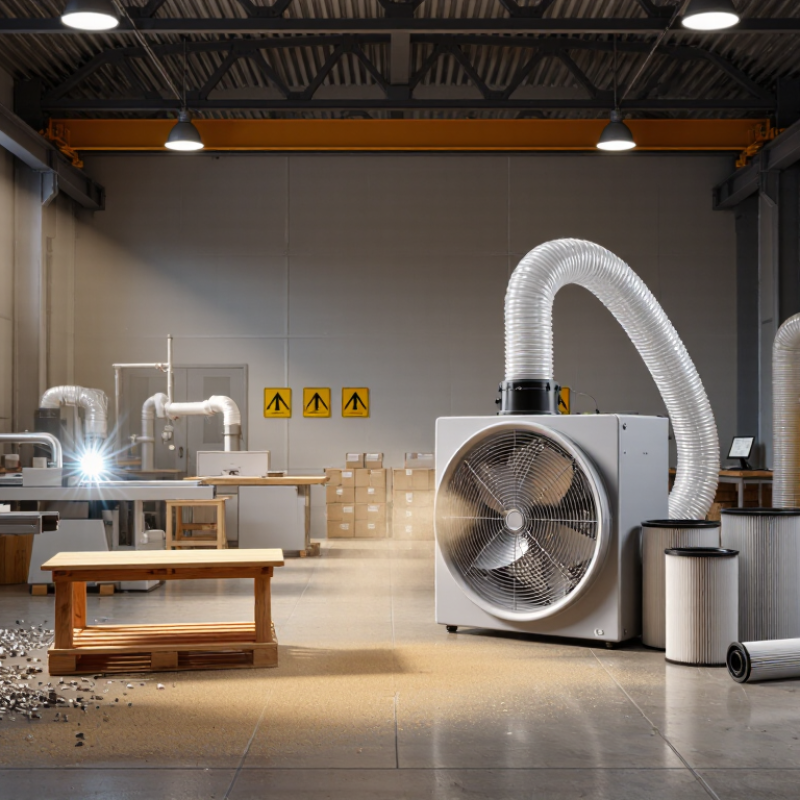
A dust fan is an industrial air-moving device designed to capture and transport airborne particles. It moves dusty air through ducts, filters, and collection equipment. Unlike a household fan, it must overcome resistance from long pipes and clogged filters. An impeller spins inside a housing, creating pressure differences that pull air toward the fan. The dust then travels with the moving air. Airflow matters.
In a typical system, a pickup hood captures dust near a cutting, sanding, or mixing point. The fan draws this contaminated air through a duct. A separator or filter removes most particles before the air leaves the system. The fan does not make dust disappear. It transports dust to a controlled collection point. Poor sealing, sharp duct bends, or an undersized motor can reduce performance quickly.
When sourcing globally, request airflow and static-pressure data under realistic working conditions. Do not compare airflow numbers alone. Check the impeller material, motor rating, filter compatibility, noise level, and maintenance access. A practical test includes measuring suction at the pickup point while the filter becomes dirty. Vibration should remain low, with no scraping or uneven rotation. Specifications can look precise, but they may not reflect actual installation conditions. I would treat unverified laboratory figures cautiously. A slightly conservative fan may perform better than a cheaper, overstated model.

A dust fan is an industrial centrifugal fan that creates the airflow and negative pressure needed to capture and transport dust through ductwork, filters, cyclones, and discharge equipment. The impeller accelerates air containing particles, while the fan casing converts part of that velocity into static pressure.
The chart shows representative minimum conveying-air velocities commonly used in industrial dust-collection design. Higher-density or abrasive particles generally require higher duct velocity to reduce settling and blockage risk. When sourcing globally, compare the fan’s airflow, static pressure, impeller material, wear protection, motor efficiency, noise level, and certification requirements—not airflow alone.
Values are typical engineering reference points and may vary with particle size, moisture, duct layout, hood design, and system resistance. Final fan selection should be confirmed by a qualified ventilation engineer.
Choosing a dust fan begins with the application, not the catalog photo. Measure required airflow in m³/h or CFM, then calculate total static pressure. Include duct length, bends, filters, hoods, and future filter loading. A fan rated at 10,000 m³/h may fail when resistance rises.
Dust characteristics matter just as much. Record particle size, density, moisture, temperature, and abrasiveness. Fine powder needs controlled velocity and effective filtration. Heavy chips require a different impeller and casing design. For combustible dust, confirm the complete system’s safety classification and local compliance requirements.
Do not select the motor alone. The U.S. Department of Energy’s fan-system sourcebook reports that fans can consume up to 23% of electricity used by industrial motor systems. The IEA’s Energy Efficiency 2023 report estimates motor-driven systems use about 53% of global electricity. Small efficiency losses become expensive.
Check operating points, not maximum ratings. Ask for performance curves, test standards, sound levels, motor efficiency, duty cycle, and service access. AMCA testing principles can help compare published airflow and pressure data. A practical trial should inspect filter pressure after several production shifts. That detail is often missed. I would not pretend a spreadsheet captures every site condition. Dust changes with humidity, maintenance habits, and material batches. Leave reasonable pressure margin, but avoid oversized fans that waste energy and create excessive noise. Specification matching is imperfect, yet measured field data usually improves the next sourcing decision.
When comparing dust fans, start with the system, not the catalog headline. Axial fans move large air volumes through open, low-resistance paths. Centrifugal fans usually handle filters, long ducts, and heavier dust more effectively. Mixed-flow designs can balance both needs, but their performance depends strongly on the installation.
Airflow is commonly listed in cubic feet per minute or cubic meters per hour. Pressure is measured in pascals. Both figures matter. A fan rated for high airflow may perform poorly after adding a cyclone, filter, bends, or a narrow hose. Check the performance curve at the required pressure, not only the maximum airflow. Measure the duct diameter carefully. A small reduction can create surprising resistance. Keep it practical.
Dust type also changes the comparison. Fine powder may load a filter quickly, while wood chips need wider passages and impact-resistant components. Ask for airflow, static pressure, efficiency, motor details, noise data, and test conditions. Request drawings and inspection records before global shipment. Specifications should use consistent units. Otherwise, comparisons become unreliable.
In field testing, I once selected a fan by airflow alone. The result was weak suction at the collection point. My comparison was too simple. I would now verify the complete pressure loss and allow some operating margin. That margin should be justified, not guessed. Check service access, replacement parts, voltage compatibility, and documented safety requirements for the destination market. Cheap freight cannot repair a poorly matched fan.
Material selection affects a dust fan’s service life, safety, and maintenance cost. In my sourcing experience, galvanized steel suits many dry, non-corrosive environments. Stainless steel performs better where moisture or aggressive particles are present. Aluminum can reduce weight, but it may not suit every abrasive application. Do not choose by appearance alone. Check particle size, temperature, humidity, and chemical exposure. These details often change the correct material choice.
Safety features deserve equal attention. Look for a strong inlet guard, overload protection, thermal monitoring, and a clearly accessible emergency stop. Proper grounding helps control static electricity. Sealed bearings can reduce contamination and unexpected maintenance. For combustible dust, ask for documented suitability, suitable electrical protection, and a risk assessment from qualified professionals. A “spark-resistant” claim needs supporting test information, not just a sales description.
During global sourcing, request material certificates, inspection records, wiring diagrams, and performance test data. Verify that the fan matches the destination country’s electrical requirements and accepted safety standards. Check spare-part availability and service instructions in a language your team understands. I once underestimated the value of drain access; cleaning later took much longer than expected. The checklist is useful, but it is not perfect. Recheck assumptions with the actual installation team before approving production. Small gaps in information can become expensive problems.
Selecting a reliable global supplier starts with technical evidence, not attractive product photos. Ask for airflow curves, pressure data, motor efficiency, noise levels, and filter compatibility. These details show whether the dust fan suits your workshop, warehouse, or production line. A capable supplier should explain testing methods clearly. They should also provide material specifications and certificates relevant to your destination market. Do not trust polished photos alone.
I usually request two production samples before placing a large order. One sample runs continuously for several hours under realistic dust conditions. I record vibration, temperature, airflow, and unusual sounds. Small differences matter. Ask whether the supplier controls incoming materials and final assembly. A remote factory audit helps, but video cannot reveal every weakness. I once accepted a supplier’s test sheet without checking the measurement conditions. That decision created delays and extra inspection costs.
Compare total landed cost, not only the unit price. Include tooling, sampling, export documents, freight, duties, installation, spare parts, and warranty handling. Ask for a quote with clear delivery terms and a reasonable validity period. Payment stages should match inspection milestones. A low-priced fan may consume more electricity or require frequent maintenance. I learned this after choosing the cheapest quotation. The initial saving disappeared within months. Leave room for uncertainty. A dependable supplier communicates problems early, even when the news is inconvenient.