2026 Top Supply Centrifugal Fan Models You Should Consider?
In today's industrial landscape, choosing the right Supply Centrifugal Fan is critical. These fans play a vital role in ventilation, cooling, and air circulation. With numerous models available, selecting the right one can be daunting. Are you considering efficiency, durability, or noise levels?
The 2026 models offer innovative features to enhance performance. Yet, some fans may fall short in specific applications. It’s essential to evaluate both general specifications and unique needs. For example, will you use the fan in a dusty environment or for high-temperature applications?
With many options, you might feel overwhelmed. However, delving into the details can lead you to the best choice. Keep an eye out for efficiency ratings and customer reviews. They can reveal insights that specifications alone might not. Remember, the ideal Supply Centrifugal Fan should not just meet your demands but also exceed expectations in real-world usage.

Introduction to Centrifugal Fans and Their Applications
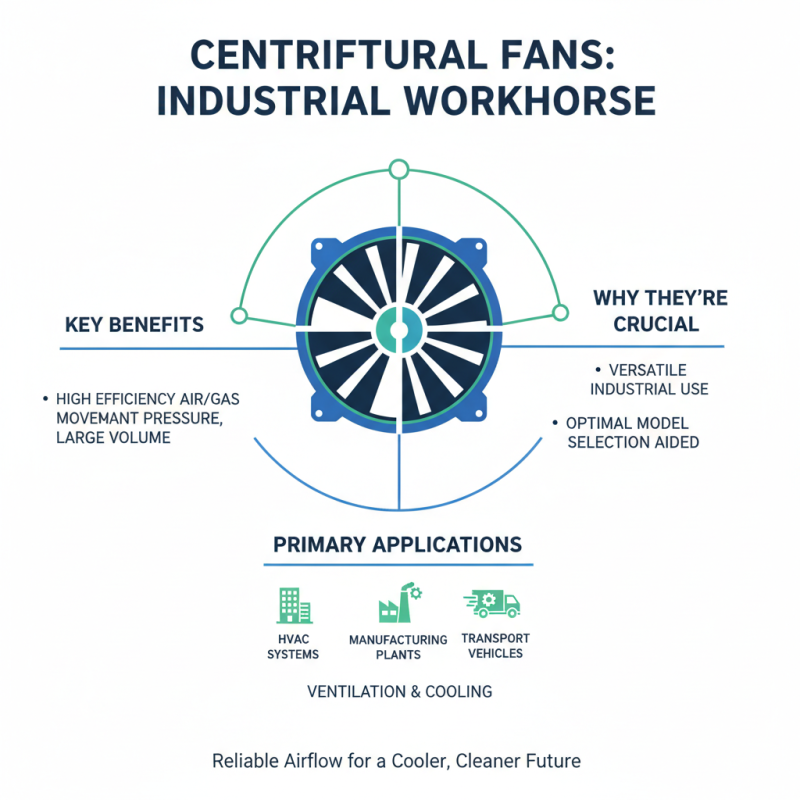
Centrifugal fans are vital in many industries. They move air and gases with high efficiency. Understanding their applications can help in selecting the right model. These fans are found in HVAC systems, manufacturing plants, and even in transport vehicles. They can handle large volumes of air while maintaining constant pressure. This makes them essential for ventilation and cooling.
In construction, centrifugal fans ensure proper air circulation. They help in maintaining comfortable working conditions. In grain storage, they prevent spoilage by controlling humidity. However, installation needs careful consideration. A poorly installed fan can lead to inefficiencies. Maintenance is also crucial for optimal performance. Regular checks can prevent breakdowns.
Selecting the right model involves more than just specifications. It requires understanding specific needs. Each application has unique challenges. Not all fans fit every situation. Sometimes, a common mistake is to overlook airflow requirements. This can result in less effective operations. Reflecting on these aspects is necessary for better outcomes.
Key Features to Look for in 2026 Centrifugal Fan Models
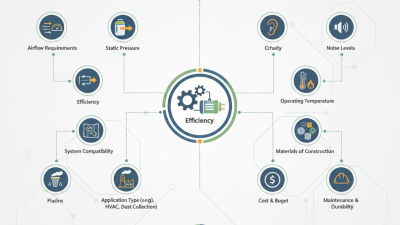
When choosing a centrifugal fan in 2026, consider several key features. Efficiency is crucial. Look for models that offer high airflow with lower energy consumption. This balance is vital for reducing operational costs. Noise levels also matter. A fan that operates quietly can improve the work environment significantly. Make sure to check the decibel ratings.
Durability is another essential aspect. A robust build can withstand harsh conditions. Materials used should resist corrosion and wear. It's wise to consider those that meet specific industry standards. Moreover, the ease of maintenance cannot be overlooked. Fans that allow for easy access to components save time and effort during regular upkeep.
Variable speed options are worth pondering. This feature allows for adaptability to changing needs. It can enhance both performance and energy savings. Finally, don’t forget warranty and support. A model backed by solid customer service can mitigate future frustrations. Aim for a fan that aligns with your unique requirements and offers room for adjustments. Consider these elements carefully. They may impact your long-term satisfaction and efficiency quite noticeably.
Top Recommended Brands for Centrifugal Fans in 2026
When looking for centrifugal fans in 2026, several brands stand out. These companies focus on performance, durability, and energy efficiency. Many users appreciate the quiet operation of these fans. They also offer various sizes and configurations to meet specific needs.
One popular choice combines advanced design features with affordable pricing. Customers often mention how easy it is to install. However, some users faced challenges when finding replacement parts. Others reported that the warranty process was not straightforward. Each model has its unique attributes and drawbacks, making careful research essential.
Another brand excels in lightweight options. These fans are ideal for portable applications. Users often highlight their compactness and efficiency. On the downside, some experiences indicate that these models may struggle in high-demand scenarios. It’s crucial to weigh the pros and cons before making a decision. Understanding your specific requirements can lead to a more satisfying purchase.
Comparison of Performance Metrics for Various Fan Models
In the world of centrifugal fans, performance metrics play a key role in choosing the right model. When evaluating fan efficiency, airflow rate and static pressure are crucial factors. Reports indicate that optimal airflow rates typically range from 2,000 to 100,000 CFM, depending on the application. However, many options do not meet these standards effectively. Variability in designs can lead to unexpected results in real-world usage.
Static pressure, measured in inches of water gauge, impacts how well a fan overcomes resistance in ductwork. A general observation is that fans with higher static pressure ratings outperform in restrictive environments. Industry data shows that many fans fall short of manufacturers' claims. This can lead to inefficiencies. Choosing a model with proven metrics is essential for achieving desired outcomes.
Sound levels also matter significantly. If a fan produces excessive noise, it disrupts operations. Studies suggest optimal sound levels should remain below 85 dBA for comfort. Nevertheless, some models exceed these limits. Attention to these details prevents complications down the line. Manufacturers that prioritize performance metrics help users make informed decisions.
2026 Top Supply Centrifugal Fan Models You Should Consider
| Model |
Airflow (Cubic Feet per Minute) |
Static Pressure (Inches wg) |
Efficiency (%) |
Noise Level (dB) |
| Model A |
1500 |
4.0 |
85 |
60 |
| Model B |
1800 |
3.5 |
90 |
65 |
| Model C |
2000 |
4.5 |
95 |
70 |
| Model D |
2200 |
5.0 |
80 |
75 |
| Model E |
2500 |
4.8 |
92 |
80 |
Maintenance Tips for Optimal Performance of Centrifugal Fans
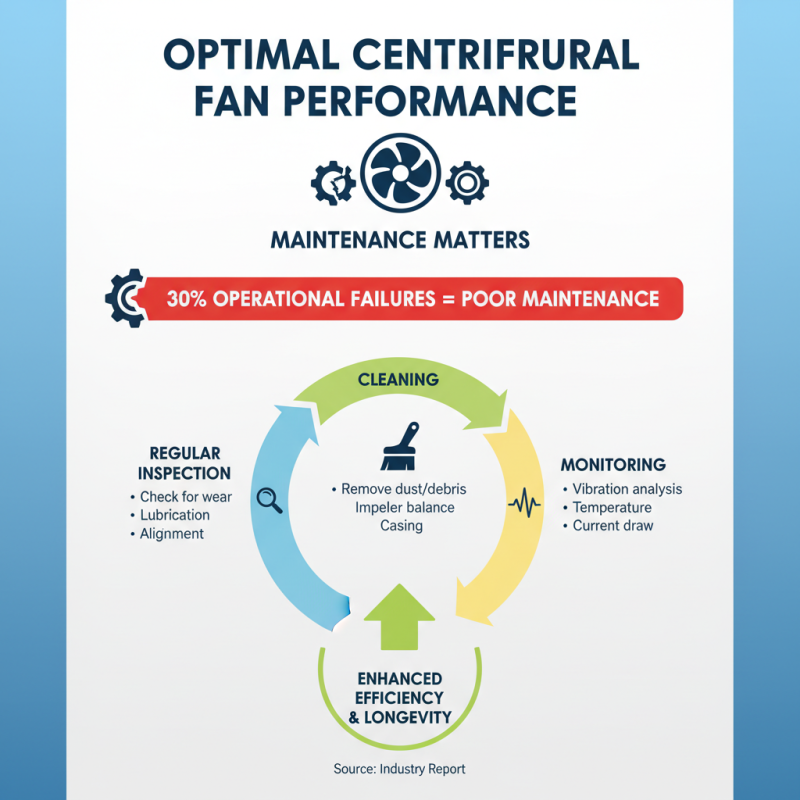
Centrifugal fans play a crucial role in various industrial processes. Proper maintenance is essential for optimal performance and longevity. According to a recent industry report, 30% of operational failures are linked to inadequate maintenance practices. Simple measures can greatly enhance the efficiency of these fans.
Regularly checking for any dirt or debris accumulation is vital. Cleaning fan blades keeps airflow consistent and avoids unnecessary energy use. It’s surprising, but many operators overlook this basic step. Moreover, lubricating moving parts can prevent wear and extend the fan’s lifespan. Unsuitable lubrication can lead to increased friction, causing potential breakdowns.
Monitoring vibration levels is another essential practice. Excessive vibrations can indicate issues that may lead to failure. If overlooked, this could escalate to costly repairs. In fact, studies show that addressing vibrations early can reduce maintenance costs by up to 20%. A proactive approach ensures fewer unexpected downtimes and enhances efficiency. Quality maintenance is not just a task; it’s a strategic priority for optimal fan performance.