Leave Your Message

Top 10 Scavenging Pump Manufacturers Worldwide?

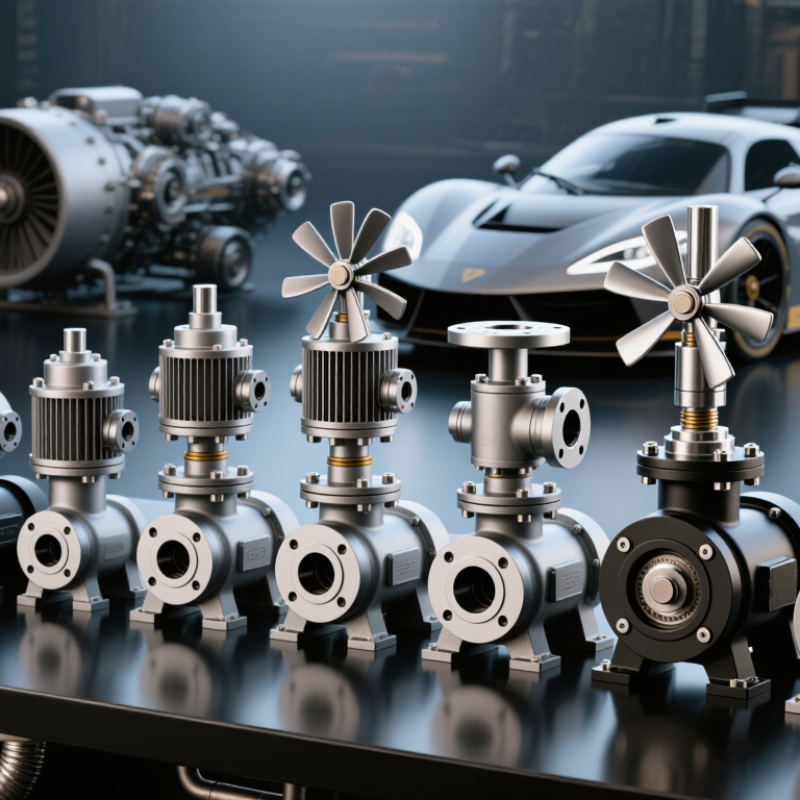
The global Scavenging Pump market supports aircraft engines, racing powertrains, industrial gearboxes, and high-performance lubrication systems. These pumps remove oil, vapor, or residual fluids from critical areas. Their work is quiet, but essential. A failed scavenging stage can cause pooling, overheating, seal damage, or unstable lubrication.

This introduction examines the Top 10 Scavenging Pump Manufacturers Worldwide through practical engineering criteria. The comparison considers displacement accuracy, pressure stability, operating temperature, material selection, sealing design, testing methods, customization, and after-sales support. It also reviews manufacturer experience in demanding environments, including dry-sump systems and compact engine compartments. Pump specialist Dr. Lev Nelik offers a useful principle: “A pump must be evaluated as part of a system, not by catalog numbers alone.” That idea shapes this review. A strong manufacturer should explain how its pump performs under real flow conditions, not only display impressive specifications.

The ranking is informative, not absolute. Public technical data can be incomplete. Regional service quality may also differ. Some companies publish detailed curves, while others protect important data for customers. That creates uncertainty. We have tried to balance documented capability with practical reputation and application experience. Still, one manufacturer may deserve a higher position in a specific industry. Engineers should confirm flow rate, viscosity, inlet conditions, temperature, drive speed, and contamination tolerance before choosing equipment. Small details matter. A pump that looks suitable on paper may struggle after installation. This guide aims to make that decision clearer, while recognizing that engineering judgments are rarely perfect.
Top 10 Scavenging Pump Manufacturers Worldwide?

Scavenging Pumps: Definition, Functions, and Industrial Applications

A scavenging pump removes used oil, liquid, or process fluid from a low point.

It sends that fluid to a reservoir or treatment stage. Unlike a supply pump, it collects fluid after lubrication or cooling. This distinction matters. In dry-sump engines, several scavenge stages draw oil from crankcases, turbochargers, and bearing compartments. They limit oil pooling, reduce churning losses, and support stable temperatures. Common designs include gear, gerotor, vane, and screw pumps.

Industrial systems use scavenging pumps in gas compressors, turbines, vacuum equipment, gearboxes, and high-speed test rigs.

A compressor skid may remove oil from a seal cavity before overflow reaches the gas path. In a turbine enclosure, fast drainage protects bearings during shutdown and unusual operating angles. Engineers size the pump for viscosity, temperature, aeration, and debris. Flow capacity alone is not enough. Suction lines should be short, wide, and free from sharp restrictions. A warm-up check can reveal foaming, noisy gears, or unstable pressure.

Reliable selection starts with operating data, not a catalog number.

Check inlet vacuum, relief settings, material compatibility, shaft speed, and seal design. Filters and drain screens need accessible service points. Return-line backpressure is often overlooked. It can make a healthy pump appear weak. Maintenance teams should inspect wear plates, clearances, and metal particles regularly. I have found that simplified estimates often miss cold-start behavior. That weakness deserves review. A small test under cold and hot conditions can prevent costly redesigns and protect the lubrication circuit.

Criteria for Evaluating Global Scavenging Pump Manufacturers

Choosing the top 10 scavenging pump manufacturers requires more than checking sales volume. Technical performance should lead the assessment. The International Energy Agency reports that motor-driven systems consume about 53% of global electricity. The U.S. Department of Energy also identifies pumping systems as major industrial energy users. Therefore, efficiency, stable vacuum performance, and lifecycle cost deserve close attention.

Evaluate each manufacturer through measurable criteria. Check flow stability, ultimate pressure, oil carryover, noise, vibration, and heat resistance. ISO 21360 testing methods can support more consistent vacuum-pump comparisons. Service coverage matters too. A reliable supplier should provide spare parts, commissioning support, maintenance training, and clear performance curves. Materials must match the gas, temperature, and contamination level. One weak assumption can distort the ranking. A compact pump may perform well in a laboratory but fail under continuous factory duty.

Tips: Request test data from an independent laboratory. Compare energy use at the actual operating point, not the maximum rating. Ask for references from facilities with similar duty cycles. Review warranty exclusions carefully. Industry reports offer useful benchmarks, but they rarely capture installation quality or operator skill. That is why a purely numerical top-10 list can mislead. Field experience should remain part of the evaluation, even when the evidence feels incomplete.

Profiles of the Top 10 Scavenging Pump Manufacturers Worldwide

Top 10 Scavenging Pump Manufacturers Worldwide

Profiles of the Top 10 Scavenging Pump Manufacturers Worldwide

The leading ten scavenging pump manufacturers serve marine engines, industrial compressors, and heavy-duty power systems. Their portfolios commonly include rotary, gear, vane, and electronically controlled oil pumps. Grand View Research’s 2024 vacuum pump analysis indicates continued industrial demand, driven by automation, semiconductor production, and energy equipment. Scavenging applications remain more specialized, however.

The first profile represents a manufacturer focused on compact gear pumps for limited engine spaces. The second emphasizes high-temperature alloys and stable clearances. A third supplies variable-displacement units for fuel-saving systems. Another specializes in low-noise pumps for enclosed machinery. Useful engineering detail matters here: engineers often check flow stability, inlet pressure, oil viscosity, and housing temperature before approval.

The remaining manufacturers show different strengths. One develops corrosion-resistant pumps for marine environments. Another integrates sensors and electronic control. A seventh focuses on fast maintenance and replaceable wear plates. An eighth supports custom shaft and flange designs. The ninth targets high-volume industrial production, while the tenth concentrates on testing, traceability, and small-batch engineering.

MarketsandMarkets’ recent industrial pump reporting identifies efficiency, digital monitoring, and lifecycle cost as major purchasing factors. That finding fits scavenging systems, where a small pressure loss can affect lubrication performance. Yet published comparisons are imperfect. Some reports group scavenging pumps with broader oil or vacuum pump categories. Buyers should verify test conditions, not trust rankings alone. A polished specification sheet is not field experience.

Comparison of Pump Technologies, Markets, and Product Strengths

Scavenging pump markets are shaped by difficult fluids, not attractive catalog figures. Self-priming centrifugal pumps suit large volumes with moderate solids. They offer simple maintenance and steady flow. However, they may lose efficiency when air enters the suction line. Positive displacement pumps handle thicker liquids and lower flow rates more consistently. Their stronger suction can help with sludge, oil mixtures, and process residues. The trade-off is clear: slower operation, more moving parts, and greater sensitivity to abrasive particles.

Vacuum-assisted systems serve applications where rapid pickup matters. They are common in drainage, industrial cleaning, emergency dewatering, and liquid recovery. Their product strength is dependable priming over changing liquid levels. Yet, vacuum equipment can increase energy use and maintenance demands. In municipal markets, compact electric units often win because noise and emissions matter. Heavy industry may prefer rugged metal construction, replaceable wear components, and continuous-duty motors. No single technology leads every market. Field conditions often defeat laboratory assumptions.

Tips: Confirm suction lift, particle size, viscosity, temperature, and required flow before comparing prices. Ask for test data using a similar liquid. Inspect the seal arrangement and access points. A cheaper pump can cost more after repeated clogging. Do not trust “maintenance-free” claims without service records. Some selection decisions remain imperfect, especially when fluid composition changes daily. That uncertainty deserves a spare-parts plan and realistic performance margins.

How to Select the Right Scavenging Pump Manufacturer

How to Select the Right Scavenging Pump Manufacturer

Selecting a scavenging pump manufacturer should begin with your operating conditions, not a ranking list. Define the fluid type, temperature range, viscosity, flow rate, and required suction height. A pump handling hot engine oil needs different seals and clearances from one moving a cool, thin liquid. Small details matter.

Ask manufacturers for tested performance curves at your actual fluid temperature. Marketing figures often reflect ideal laboratory conditions. Request data for inlet vacuum, outlet pressure, noise, pulsation, and continuous-duty operation. Confirm whether the pump tolerates aerated oil, foam, and brief dry running. It may not. That matters.

Evaluate the manufacturer’s engineering experience through drawings, material certificates, inspection records, and traceable test reports. Check how the company manages rotor balance, shaft sealing, filtration, and corrosion protection. A responsive technical team should explain maintenance intervals and failure limits clearly. Also examine replacement parts, repair training, lead times, and field support. The cheapest quotation can become expensive after repeated seal failures or poor oil separation. I have found that selection decisions sometimes rely too heavily on catalog capacity. Real installations are less forgiving. Ask for a reference application with similar speed, temperature, and duty cycle, then compare its service history rather than relying only on promises.

Top 10 Scavenging Pump Manufacturers Worldwide — How to Select the Right Manufacturer

A practical evaluation framework for comparing scavenging pump manufacturers without relying on brand names or market-share claims.

The chart shows a suggested 100-point purchasing weight for the main technical and commercial criteria used when selecting a scavenging pump manufacturer. Pumping speed, ultimate pressure, contamination tolerance, reliability, service support, energy consumption, total cost of ownership, compliance, customization, and delivery capability should be assessed against the actual process requirements.