Top Tips for Choosing the Best Tailings Transfer Pump?
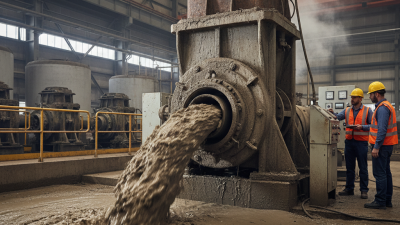
Choosing the right Tailings Transfer Pump can be challenging. Various factors impact your decision. These pumps are essential in many industries. They help in transferring waste materials safely and efficiently. A wrong choice can lead to operational issues.
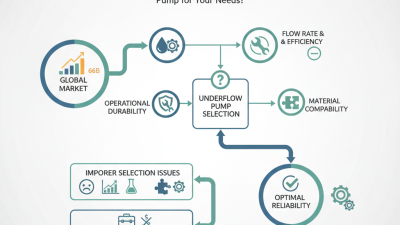
Consider the specific requirements of your project. Do you need a pump that can handle high solid content? Or are you focusing on energy efficiency? Reliability is critical. Poor performance can disrupt operations. Additionally, assess the pump's durability against harsh environments.
Expertise in choosing the right equipment matters. Consult professionals who understand these systems. They can guide you in selecting a pump that meets your needs. Understanding your options ensures you make a well-informed decision. It's okay to feel uncertain; thorough research can clarify your direction.
Key Factors to Consider When Selecting a Tailings Transfer Pump
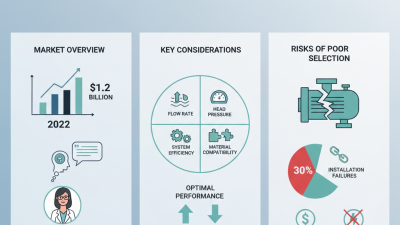
When selecting a tailings transfer pump, several key factors demand attention. The pump's hydraulic performance is critical. According to a report by the International Journal of Mining and Mineral Engineering, nearly 30% of pump failures stem from poor flow rates and inadequate pressure. Analyzing the specific gravity and viscosity of your tailings can help ensure efficiency. Overestimating these factors might lead to energy inefficiency and higher operational costs.
Material compatibility is another essential consideration. Tailings can be abrasive and corrosive. Pumps made from durable materials can reduce wear and tear. A study by the Society for Mining, Metallurgy & Exploration shows that using the right material increases pump lifespan by up to 40%. Cost implications are also significant. While cheaper options might seem appealing, investing in quality can prevent costly breakdowns and production losses.
Pump size should be tailored to your specific needs. An oversized pump may cause excessive wear, while an undersized one could lead to inefficiency. According to the Global Mining Equipment Market Report, proper sizing can enhance energy efficiency by nearly 15%. Choosing the right pump is not just about obtaining a unit but finding an ideal match for your unique operational parameters.
Types of Tailings Transfer Pumps: Pros and Cons
When selecting a tailings transfer pump, it’s vital to understand the various types available. Submersible pumps are often favored for their ease of use. They can operate directly underwater, making them ideal for deep tailings ponds. However, they may require more maintenance due to prolonged exposure to harsh conditions.
On the other hand, centrifugal pumps provide efficient flow rates. They work well for thinner tailings, ensuring quicker transfer. The downside? They might struggle with thicker, more viscous materials. This can lead to blockages, resulting in downtime that can affect operations. It’s important to assess the material characteristics before making a decision.
Positive displacement pumps present another option. These pumps excel in handling viscous slurries, providing consistent flow. Nonetheless, they can be more expensive and complex to maintain. Operators must consider the total cost over the product’s lifetime. Each pump type has advantages and drawbacks. A detailed evaluation is crucial to align your needs with the right pump solution.
Pump Performance Metrics: Flow Rate and Head Pressure Explained
When selecting a tailings transfer pump, understanding pump performance metrics is crucial. Two primary metrics to consider are flow rate and head pressure. Flow rate refers to the volume of fluid the pump can move within a specific time frame. High flow rates are essential for efficient operations, especially in mining and industrial applications. However, an excessively high flow rate can lead to turbulence, affecting the material being transported.
Head pressure, on the other hand, measures the pump's ability to lift fluid to a certain height. It's vital for determining how far the pump can push the tailings. A pump with insufficient head pressure may struggle in applications requiring elevation changes. Balancing both metrics is key. Too low on one could lead to performance issues, such as pump cavitation or hydraulic imbalance.
In practice, many users overlook the importance of these metrics. Some choose pumps based solely on price or brand reputation. This can result in operational inefficiencies. Each site's unique requirements should guide the selection process. Understanding how flow rate and head pressure interact can help prevent costly mistakes. Assessing these parameters carefully can enhance overall project success.
Materials and Durability: Choosing the Right Pump for Tailings
When selecting a tailings transfer pump, material choice significantly impacts
durability and efficiency. Many pumps are subjected to
abrasive and corrosive materials, which can lead to premature wear. According to a report by the
Mining Equipment Association, over 30% of pump failures in the industry stem from material degradation.
Metal pumps, often made from cast iron or stainless steel, offer robustness for harsh environments.
However, composite materials provide essential resistance against corrosion, extending the lifespan of pumps. In a study
published in the Journal of Mining Science, 50% of operators reported that pumps made
with advanced polymers lasted longer than traditional metal options in acidic conditions.
Additionally, pump design plays a crucial role in performance. Impeller designs that minimize turbulence can enhance
efficiency and reduce wear. Research indicates that pumps designed for specific applications can decrease energy consumption
by up to 20%. Despite these insights, many operators still rely on outdated
technology, leading to inefficiencies. Integrating new materials and designs requires both initial investment and ongoing evaluation of
performance data.
Maintenance and Support: Ensuring Long-term Reliability of Your Pump
When it comes to tailings transfer pumps, maintenance is key for long-term reliability. Regular checks can prevent breakdowns. Monitoring pump performance ensures optimal operation. Operators should inspect seals, bearings, and electrical components frequently. A small issue can lead to major disruptions.
Building a support system for your pump is equally important. Document maintenance records diligently. This not only helps in identifying recurring issues but also aids future troubleshooting. Engaging with experienced technicians can improve overall understanding. Feedback from users can provide insights into common pitfalls that may arise over time.
Tailings pumps work in harsh conditions. Factors like sediment concentration affect performance. Understanding these specifics is vital. Training operators to recognize subtle signs of wear can extend the life of the pump. Yet, not every user may grasp this from the start. Continuous learning and adaptation should be encouraged to enhance efficiency.
Top Tips for Choosing the Best Tailings Transfer Pump
| Criteria |
Recommendation |
Maintenance Tips |
Long-term Reliability |
| Pump Capacity |
Choose based on maximum expected flow rates |
Regularly check for wear and tear |
Use high-quality materials for long-lasting performance |
| Material Compatibility |
Select pumps made from corrosion-resistant materials |
Inspect seals and gaskets periodically |
Maintain optimal operating conditions to prevent damage |
| Power Source |
Evaluate electric vs. diesel-powered options |
Ensure regular servicing of the power unit |
Implement redundant power systems for reliability |
| Portability |
Consider lightweight models for easy transport |
Store pump in a dry environment to prevent mold |
Routine maintenance enhances lifespan |
| Operating Environment |
Assess environmental conditions and select accordingly |
Regularly clean and inspect pump for debris |
Adapt operations based on seasonal changes |