Leave Your Message

10 Essential Tips for Choosing the Right Tailings Transfer Pump

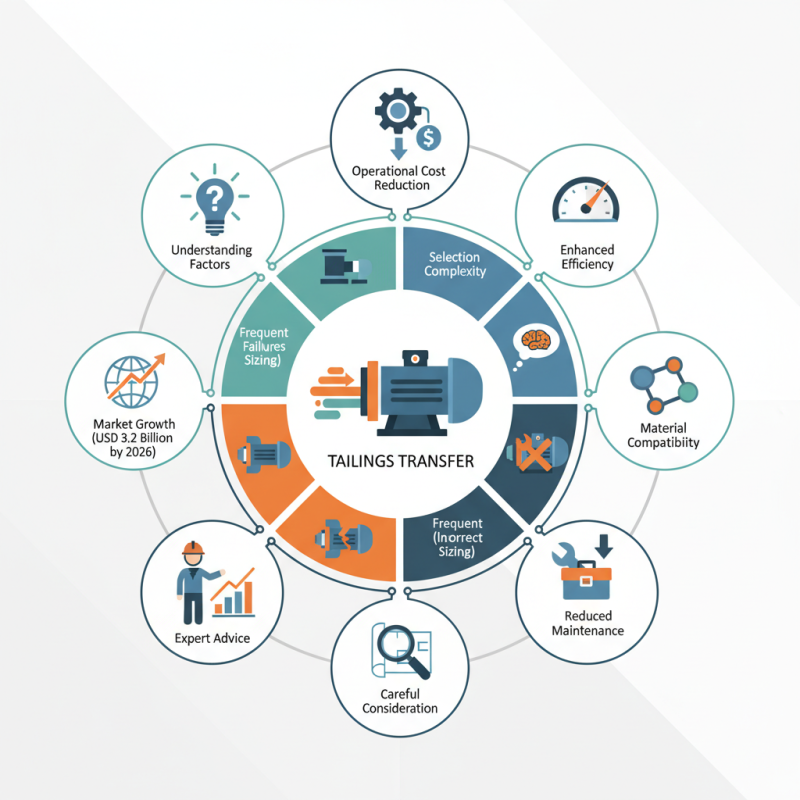
In the mining and processing industries, the selection of the right Tailings Transfer Pump is critical. A report by the Global Industry Analysts Inc. projects that the tailings management market will reach USD 3.2 billion by 2026. Choosing the appropriate pump can significantly reduce operational costs and enhance efficiency.

Industry expert Dr. Alan Green, a renowned hydraulic engineer, states, "Selecting the right equipment is not just important; it's essential to operational success." The functionality of these pumps impacts the overall performance of tailings disposal systems. Given the complexities involved, it is easy to make errors in selection.

For example, incorrect sizing can lead to frequent failures, costing precious resources. Many companies underestimate the importance of pump material compatibility with specific tailings. This can result in unforeseen maintenance issues. Navigating these challenges requires careful consideration and expert advice. Thus, understanding the underlying factors becomes paramount for success in utilizing Tailings Transfer Pumps effectively.
10 Essential Tips for Choosing the Right Tailings Transfer Pump

Understanding the Basics of Tailings Transfer Pumps

10 Essential Tips for Choosing the Right Tailings Transfer Pump

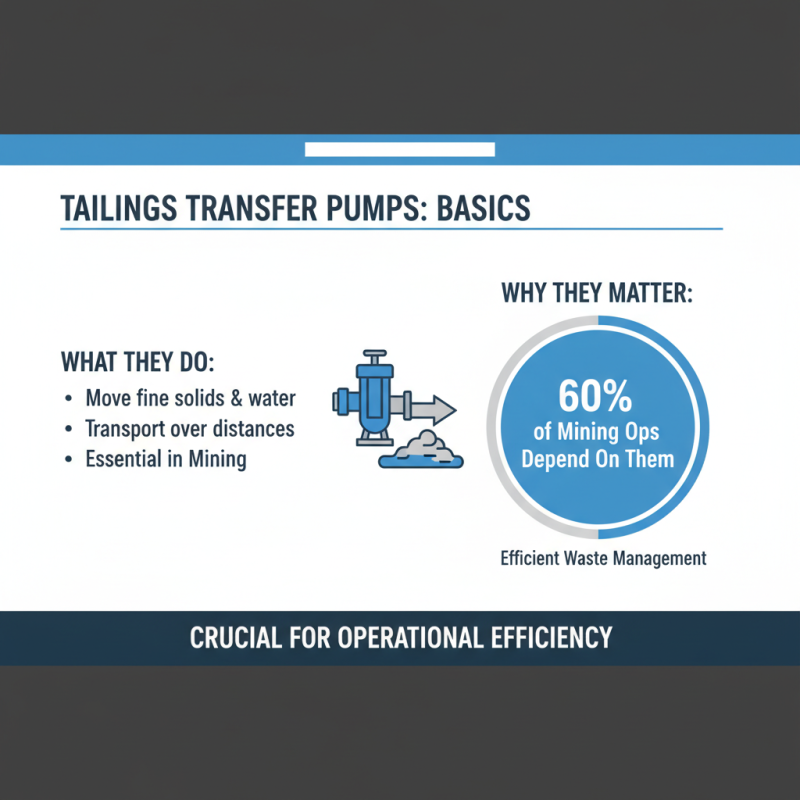
When selecting the right tailings transfer pump, understanding the basics is crucial. Tailings transfer pumps are essential in the mining industry. They transport fine solids, often mixed with water, over varying distances. According to a recent industry report, around 60% of mining operations depend on efficient tailings management systems. This highlights the significance of choosing the right pump to maintain operational efficiency.

Pump selection is influenced by several factors. Fluid viscosity, temperature, and the size of the solids all matter. A 2022 study indicated that poorly chosen pumps can lead to operational inefficiencies, increasing maintenance costs by up to 15%. Regular assessments are essential. Many operators face challenges, such as wear and tear or clogging, which can severely disrupt operations. The material selection for pump construction is often overlooked, though it impacts durability and performance significantly.

Tailings can have a diverse composition, making it vital to select a pump that suits specific conditions. When dealing with abrasive materials, for instance, a robust pump design can prevent premature failure. Operators must continually reflect on their pump performance. A failure to do so can result in costly downtime and operational slowdowns. Tailings transfer pumps may seem straightforward, but their choice requires deep understanding.
Key Factors to Consider When Selecting a Tailings Pump

Choosing the right tailings transfer pump is crucial for efficient operations. When selecting a tailings pump, consider several key factors. The pump's material must withstand corrosive elements found in tailings. Different materials offer varying levels of durability. You may choose metals or polymers based on the specific tailings composition.

Another aspect to reflect on is the pump's flow rate and head. Ensure the pump can handle the required flow within your system. Pump size matters too. A pump that is too small may cause operational delays. Conversely, an oversized pump might lead to energy inefficiency. Take time to analyze your site conditions thoroughly.

Additionally, think about maintenance requirements. Some pumps demand frequent servicing, while others may run longer without intervention. Choosing a pump with difficult maintenance may result in unplanned downtimes. Consider the availability of replacement parts as well. This often influences operational continuity. Balancing these factors can feel overwhelming, but it's essential for optimal performance.

Assessing Pump Capacity and Efficiency Requirements

When selecting a tailings transfer pump, assessing pump capacity and efficiency is crucial. A well-chosen pump ensures reliable operation in the harsh environment of mining. Efficiency ratings can significantly impact operational costs. According to Industry Data Report 2022, a pump with 85% efficiency can save over 10% in energy costs compared to a less efficient model.


Tip: Evaluate your site's specific needs. Consider the size and composition of the tailings. These factors influence the required flow rate and pump size. For example, a high-silt content may necessitate a pump designed for higher viscosity.


Another critical aspect is understanding system dynamics. Tailings transport often includes long pipeline runs. This can affect pump performance. A study by the Global Mining Review indicates that friction loss in pipelines can account for up to 30% of energy consumption. Thus, it’s essential to calculate total dynamic head accurately.


Tip: Don’t overlook maintenance requirements. Choosing a pump that accommodates easy access to key parts can enhance efficiency. Regular maintenance can improve a pump's lifespan and performance. It's a mistake to ignore these factors.

Evaluating Material Compatibility for Pump Durability

Selecting the right tailings transfer pump requires careful consideration of material compatibility. Corrosive and abrasive materials can cause significant wear and tear. According to a report by the Environmental Protection Agency, improper material choices can reduce pump lifespan by up to 50%. This emphasizes the need to evaluate material compatibility thoroughly.

Different materials react differently under various conditions. For example, rubber linings may degrade when in contact with certain solvents. Similarly, metals can corrode when exposed to acidic environments. The Mining Industry Report notes that pumps that do not match the material being transferred can lead to costly downtimes and repairs. It’s crucial to analyze the specific characteristics of the tailings.

A proactive approach involves conducting compatibility tests. This can help identify potential issues before they arise. Some operators overlook this step and face preventable failures. Understanding the specific properties of both the material and the pump components can significantly enhance durability. Being mindful of these factors can lead to better performance and longevity of the pump.

Analyzing Cost and Maintenance Considerations

Choosing the right tailings transfer pump involves careful consideration of costs and maintenance. Maintenance is often overlooked but can be costly. A reliable pump should minimize downtime. Regular maintenance schedules can prevent major issues. Skipping routine checks might lead to expensive repairs.

Consider the long-term costs, not just the initial price. Some pumps may seem affordable but require frequent repairs. Higher efficiency pumps might save money in the long run. Evaluate energy consumption when making decisions. It can significantly impact operating costs.

Tip: Always ask for maintenance records. This can reveal a pump’s reliability. Look for indicators of previous issues. Understand that your choice affects your operations. A poor selection can lead to frustration and increased expenses. Investing time in analysis pays off.

10 Essential Tips for Choosing the Right Tailings Transfer Pump - Analyzing Cost and Maintenance Considerations

Tip Cost Factor Maintenance Requirement Lifespan Expectancy
Select the Right Size Higher initial cost if oversized Requires careful assessment 10-15 years
Consider Pump Efficiency Lower operational costs Periodic efficiency checks 15-20 years
Evaluate Material Compatibility Potentially higher costs for special materials Regular inspections for wear 8-12 years
Analyze Power Source Higher electricity costs for inefficient motors Maintenance on electrical components 10-15 years
Assess Mobility Needs Increased cost for portable pumps Less maintenance on stationary units 10-15 years
Check for Certification and Standards Initial cost may be higher Regular compliance assessments Varies by certification
Inquire about Warranty and Support Potential cost savings on repairs Routine maintenance covered 10-20 years
Look at Reviews and Case Studies Cost implications for unreliable pumps More frequent troubleshooting and maintenance Varies widely
Consult with Professionals Costs associated with expert advice Enhanced maintenance recommendations Potentially longer lifespan
Evaluate Total Cost of Ownership Comprehensive cost analysis Long-term maintenance insights Overall 10-15 years