10 Essential Tips for Choosing the Right Boiler Centrifugal Fan?
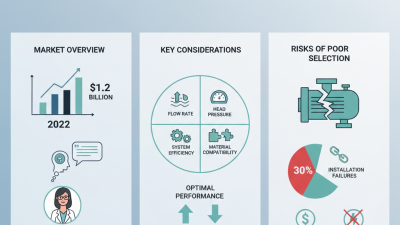
Choosing the right Boiler Centrifugal Fan is crucial for optimal system performance. The quality of airflow directly impacts energy efficiency and operational costs. A recent report from the American Society of Mechanical Engineers reveals that selecting the appropriate fan can enhance energy efficiency by up to 30%. This statistic underscores the importance of making informed choices.
Industry expert Dr. Emily Carter states, "A well-chosen Boiler Centrifugal Fan is a linchpin in industrial heating systems." Her insights highlight a common oversight: many neglect evaluating the specific needs of their systems. This can lead to inefficiencies and unnecessary expenditures.
Factors like static pressure, air volume, and noise levels play vital roles in selection. One must balance performance with reliability. The decision process can be daunting, yet it is essential to avoid hasty judgments. Conducting thorough research and consulting with experts can yield better outcomes in the long run.

Understanding the Role of Centrifugal Fans in Boiler Systems
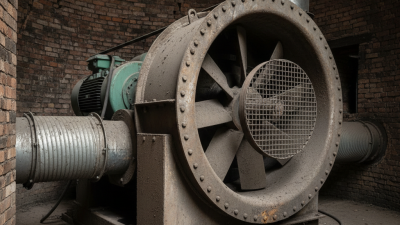
In boiler systems, centrifugal fans play a crucial role. They are responsible for moving air and flue gases through the system. These fans help maintain efficient combustion, enhancing overall energy efficiency.
The design and selection of the right fan can highly impact performance. This task requires careful consideration of airflow requirements and system pressure.
A well-chosen fan optimizes the boiler’s operation. It ensures adequate air supply for combustion and efficient heat transfer. However, some systems may struggle with fan inefficiencies over time. Maintenance practices are essential to counteract this issue. Regular checks help identify wear and tear, allowing for timely interventions. Lack of attention can lead to performance drops.
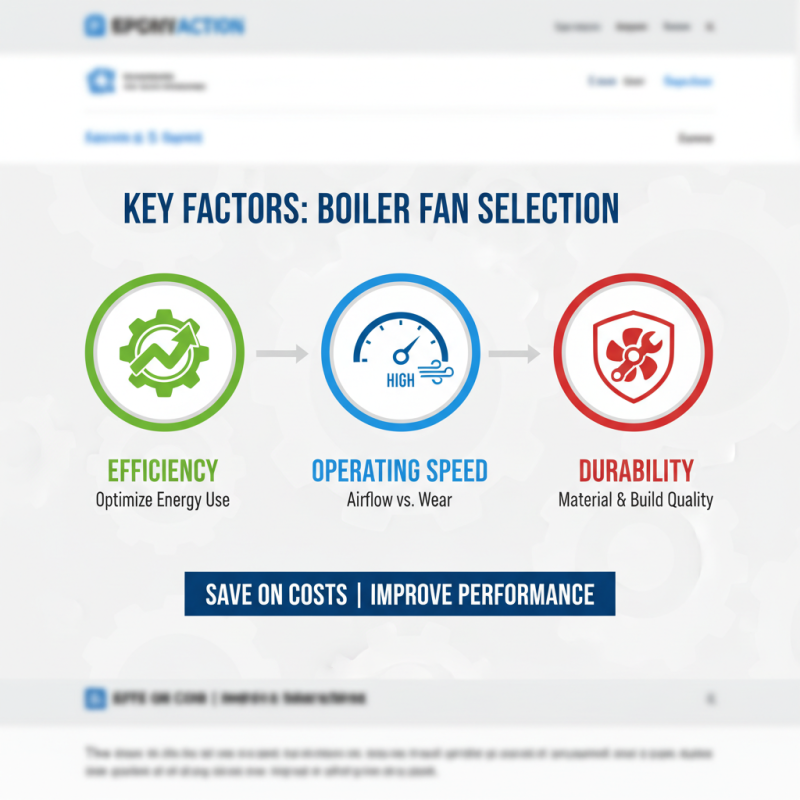
When evaluating options for centrifugal fans, consider their material and design features. The fan's construction should resist corrosion and handle high temperatures. This is crucial in boiler applications. Some fans might not meet these demands, leading to premature failure. The right selection is vital for both safety and efficiency. Balancing cost with quality requires diligence and knowledge.
Evaluating Fan Performance Metrics: Flow Rate and Pressure
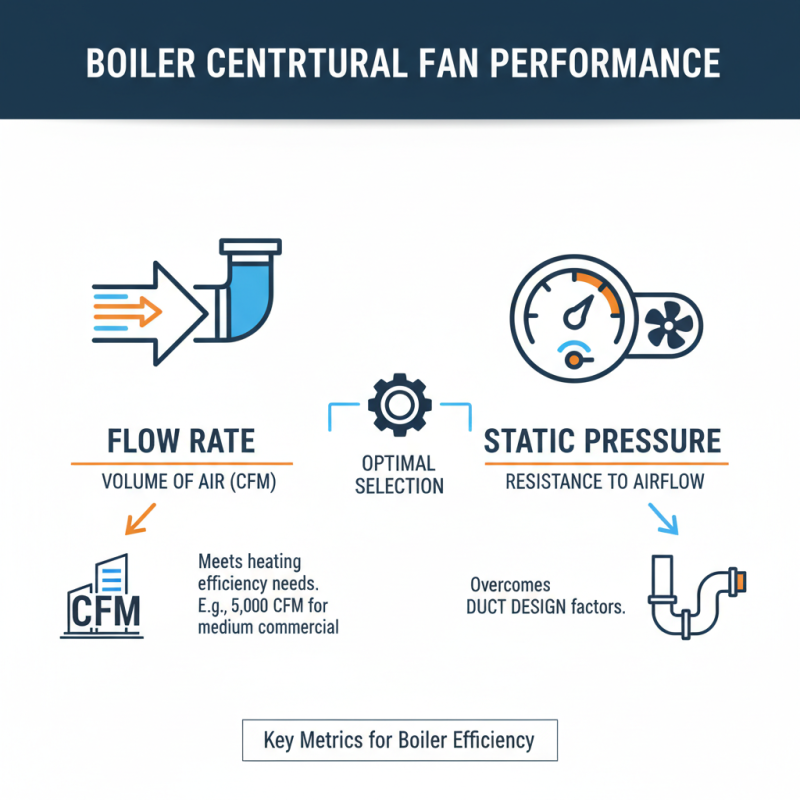
When selecting a boiler centrifugal fan, understanding performance metrics like flow rate and pressure is crucial. Flow rate measures the volume of air a fan can move, typically expressed in cubic feet per minute (CFM). According to industry reports, a well-chosen fan should meet or exceed the required CFM for optimal heating efficiency. For instance, a 5,000 CFM requirement is common in medium-sized commercial applications, but factors like duct design can impact this needed flow.
Pressure metrics are equally important. The static pressure reflects the resistance encountered by airflow in the system. A fan with insufficient pressure may lead to reduced efficiency and increased energy consumption. For example, a fan designed for 4 inches of static pressure may struggle in systems requiring 6 inches. This indicates a mismatch that could affect overall performance.
Evaluating these metrics requires careful analysis and sometimes a bit of trial and error. Balancing flow rate and pressure while considering system design can be challenging. Engaging with industry benchmarks can provide guidance, but real-world applications often reveal discrepancies. This highlights the need for ongoing assessment and adjustment post-installation to ensure fan performance meets operational demands.
Material and Design Considerations for Durability and Efficiency
When selecting a boiler centrifugal fan, the material and design are crucial for ensuring durability and efficiency. Most fans are made from materials like steel or aluminum. Steel is strong and durable, while aluminum offers lightweight advantages. According to industry reports, using high-grade steel can enhance a fan's lifespan by up to 50%. However, it may be heavier, affecting installation flexibility.
The design also plays a pivotal role. The impeller shape can influence airflow efficiency. Designs that minimize turbulence are preferred. Research indicates that optimized impeller design can increase fan efficiency by 15% to 20%. However, these designs often come with higher production costs, necessitating a careful cost-benefit analysis.
In addition, the coating of the fan is important. Corrosion-resistant coatings can greatly improve longevity, especially in harsh environments. While these coatings add to initial costs, they can reduce maintenance needs significantly. An overlooked factor is noise level; some advanced designs may operate more quietly. Finding the right balance between these factors is essential for optimal performance.
10 Essential Tips for Choosing the Right Boiler Centrifugal Fan
| Factor |
Considerations |
Materials |
Efficiency Rating |
| Airflow Requirements |
Determine the required air volume for your specific application. |
Aluminum or Steel |
High Efficiency (85%+) |
| Static Pressure |
Identify the static pressure needed to overcome system resistance. |
Carbon Steel |
Moderate Efficiency (70%-85%) |
| Noise Levels |
Select models designed for low noise output if necessary. |
Plastic Composite |
Very High Efficiency (90%+) |
| Installation Space |
Assess the available space for proper installation and maintenance access. |
Stainless Steel |
High Efficiency (80%+) |
| Durability |
Choose robust materials for challenging environments. |
Galvanized Steel |
Moderate Efficiency (75%-85%) |
| Maintenance |
Evaluate ease of maintenance and availability of parts. |
Alloy Steel |
Low Efficiency (60%-70%) |
| Energy Efficiency |
Opt for fans that meet or exceed energy efficiency standards. |
Composite Materials |
Very High Efficiency (88%+) |
| Design Flexibility |
Choose a fan that can adapt to future changes in system design. |
Customizable Materials |
Variable Efficiency (depends on design) |
| Cost |
Evaluate initial investment against operating costs and lifespan. |
Budget Options Available |
Varies by Type |
Maintenance Needs and Support Services for Optimal Fan Longevity
Choosing the right boiler centrifugal fan involves careful consideration of maintenance needs and support services. Proper maintenance is vital for ensuring the longevity of your fan. Regular inspections help identify issues before they become major problems. Dust and debris can accumulate over time, affecting performance. Cleaning the fan and its components can drastically improve efficiency.
When selecting a fan, consider the availability of support services. Quality support can provide guidance on maintenance schedules and best practices. A reliable provider will offer troubleshooting assistance and timely repairs. Access to expert advice can make a significant difference in maintaining optimal performance.
Take the time to evaluate your fan's specifications. Ensure it matches the requirements of your boiler system. Also, factor in energy efficiency. An efficient fan not only reduces operational costs but also enhances reliability. Neglecting these key aspects can lead to unnecessary expenses and operational downtime. Regular engagement with support teams can address potential concerns early on.
10 Essential Tips for Choosing the Right Boiler Centrifugal Fan
This bar chart illustrates the importance of various factors when selecting a boiler centrifugal fan, based on a survey conducted on industry professionals. The factors considered include efficiency, maintenance needs, noise levels, and support services, showing their impact on optimal fan longevity.