What is a Dust Centrifugal Fan and How Does It Work?
In the world of industrial ventilation, the Dust Centrifugal Fan plays a crucial role. John Smith, an expert in air management systems, once said, "A well-designed Dust Centrifugal Fan is essential for effective dust control." It efficiently removes airborne dust from environments, protecting both equipment and workers.
This fan operates by using centrifugal force to separate dust particles from the air. The design focuses on the fan blades, which spin at high speeds. As air enters, dust gets thrown outwards and captured in a filter. These details highlight how integral this fan is in various industries, from manufacturing to woodworking.
Yet, not every design achieves optimal performance. Several fans struggle with efficiency and noise levels. A poorly maintained Dust Centrifugal Fan may lead to increased energy costs. Companies should constantly evaluate their systems to ensure they meet standards. This ongoing reflection is crucial for improving air quality and overall productivity in the workplace.
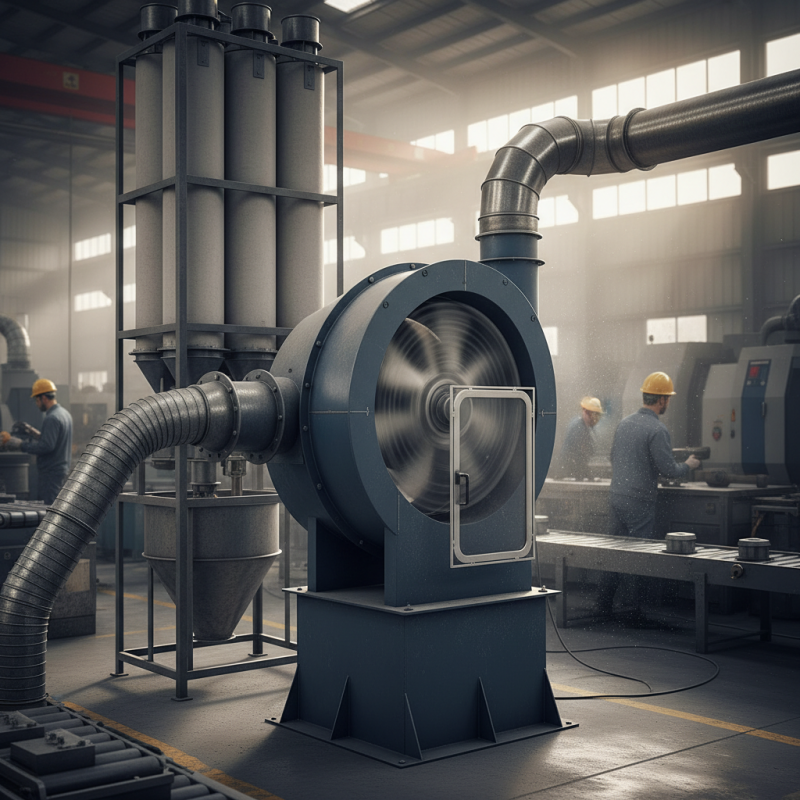
Understanding Dust Centrifugal Fans: Definition and Purpose
Dust centrifugal fans are essential in various industries for managing airborne particles. These fans generate high airflow and create a pressure difference that effectively moves dust and debris away. Their primary purpose is to maintain clean work environments, ensuring safety and efficiency. According to industry reports, proper ventilation systems can reduce dust-related respiratory issues by up to 30%.
Tips:
Regular maintenance can enhance performance. Clean the fan blades often. This helps maintain airflow efficiency and reduces potential malfunctions.
Understanding the design of dust centrifugal fans is crucial. They often feature an impeller that accelerates air, directing it through a volute. This mechanism allows for effective dust removal. A study from the American Society of Mechanical Engineers highlights that industrial facilities benefit significantly from using these fans to mitigate hazards associated with dust accumulation.
Tips:
Monitor air quality frequently. Install sensors to track dust levels. This proactive approach ensures effective dust control and compliance with safety standards.
Principle of Operation: How Dust Centrifugal Fans Generate Airflow
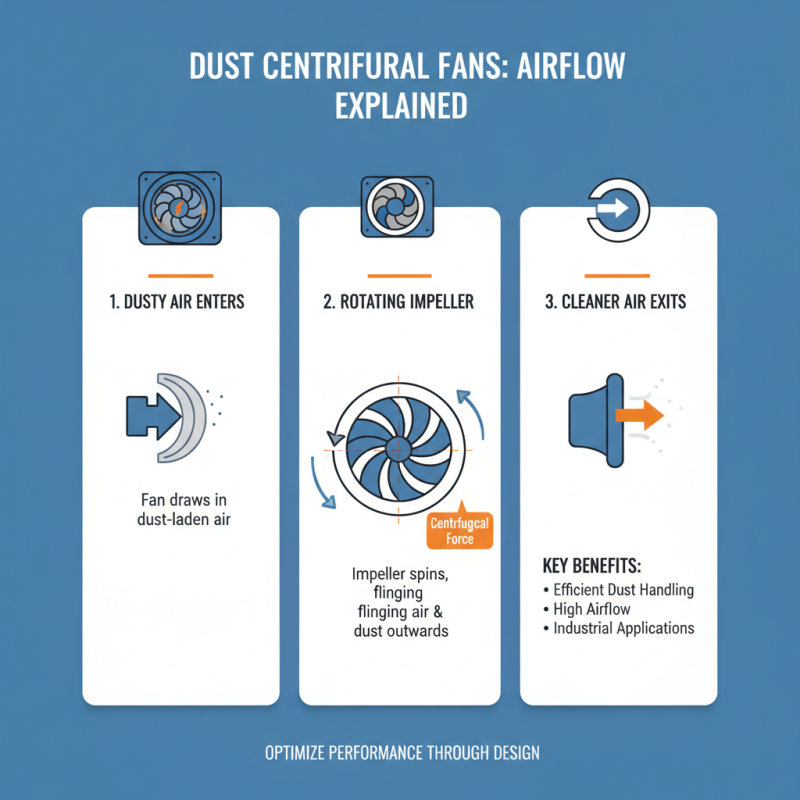
Dust centrifugal fans play a vital role in various industrial applications. They are designed to handle dust-laden air efficiently. Understanding how they generate airflow can help optimize their performance.
The principle of operation revolves around the fan's impeller. The impeller spins rapidly, creating a centrifugal force. This force pushes air outward, increasing its velocity. As air moves through the fan, it changes direction, guided by specially designed housing. This design ensures a consistent and controlled airflow. The dust particles are separated from the air as it passes through filters or cyclones.
However, not all designs are perfect. Some fans may struggle with airflow consistency in high-load situations. Over time, dust buildup can affect performance. Regular maintenance is crucial to avoid these issues. Monitoring airflow and performance can reveal potential problems early on. Understanding these nuances helps in selecting the right fan for specific needs.
Components of Dust Centrifugal Fans: Key Parts Explained
Dust centrifugal fans play a critical role in various industrial applications. Understanding their components is essential for efficient operation. These fans typically consist of several key parts, each contributing to effective dust management.
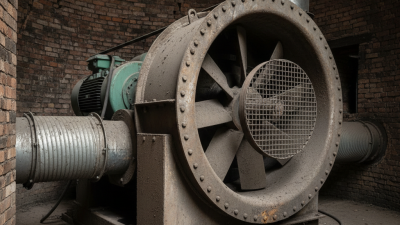
The impeller is at the core of the fan's design. It generates airflow by converting rotational energy into kinetic energy. Manufacturers often optimize impeller designs for specific dust loads. A well-optimized impeller can improve efficiency by up to 30%, according to a study by the American Society of Mechanical Engineers.
Next, the housing encases the impeller. Its design influences airflow direction and minimizes turbulence. Often, housing is constructed from durable materials to withstand abrasive dust. This durability is crucial, as dust can significantly erode weaker materials over time.
Another vital component is the motor. The motor's power directly affects performance. In many cases, fans operate at variable speeds to adapt to changing dust levels. Reports indicate that adjustable-speed motors can enhance energy savings by 25%. However, the balance between performance and energy efficiency can be tricky.
Overall, a dust centrifugal fan integrates these components to optimize airflow and dust handling. The efficiency of each part is intertwined with the fan's overall performance. Understanding these components helps in maintaining optimal function and longevity.
Applications of Dust Centrifugal Fans in Various Industries
Dust centrifugal fans play a critical role in various industries by managing airborne particles. These fans are essential in environments where dust and particulate matter pose significant hazards. In manufacturing, for instance, they help maintain air quality in facilities that produce metal shavings or wood dust. The high dust generation in these settings can lead to health issues for workers and equipment malfunctions.
In the mining sector, dust centrifugal fans operate efficiently to control the concentration of particulate matter. According to industry reports, excessive dust can decrease visibility and contribute to respiratory diseases among workers. Implementing effective dust control measures, including fans, can reduce dust levels by up to 80%. However, maintenance is key. Fans can become less effective over time if not serviced properly, which brings about challenges for operations looking to ensure compliance with health regulations.
Moreover, the agricultural industry finds value in dust control as well. Dust generation from tilling and harvesting can affect both crop yield and air quality. The use of centrifugal fans helps mitigate these issues. A report from an agricultural study indicated that proper dust management could enhance productivity by nearly 15%. Still, many farms struggle to implement such systems consistently. Balancing cost and effectiveness remains a challenge, revealing areas for improvement and innovation.
Maintenance Tips for Optimal Performance of Dust Centrifugal Fans
To ensure optimal performance of dust centrifugal fans, regular maintenance is crucial. Dust buildup can significantly affect the fan's efficiency. A simple visual inspection can reveal any obstructions or accumulated debris. A clean fan operates much more effectively. Use compressed air to remove loose dust. This task is quick and can prevent larger issues.
Lubrication is another important step. Many fans require periodic lubrication to maintain smooth operation. Check the manufacturer’s guidelines for specifics. Neglecting this may lead to premature wear and tear. Regularly inspect belts and pulleys, too. Worn components can cause vibrations and further damage the system.
Lastly, consider monitoring the fan's performance over time. Keeping track of airflow rates can highlight problems early. Sometimes, you may notice a drop in efficiency, which warrants immediate attention. Taking proactive measures not only optimizes performance but also extends the fan's lifespan. Regular upkeep is a worthwhile investment for any facility relying on dust centrifugal fans.