How to Choose the Right Mixing Pump for Your Needs?
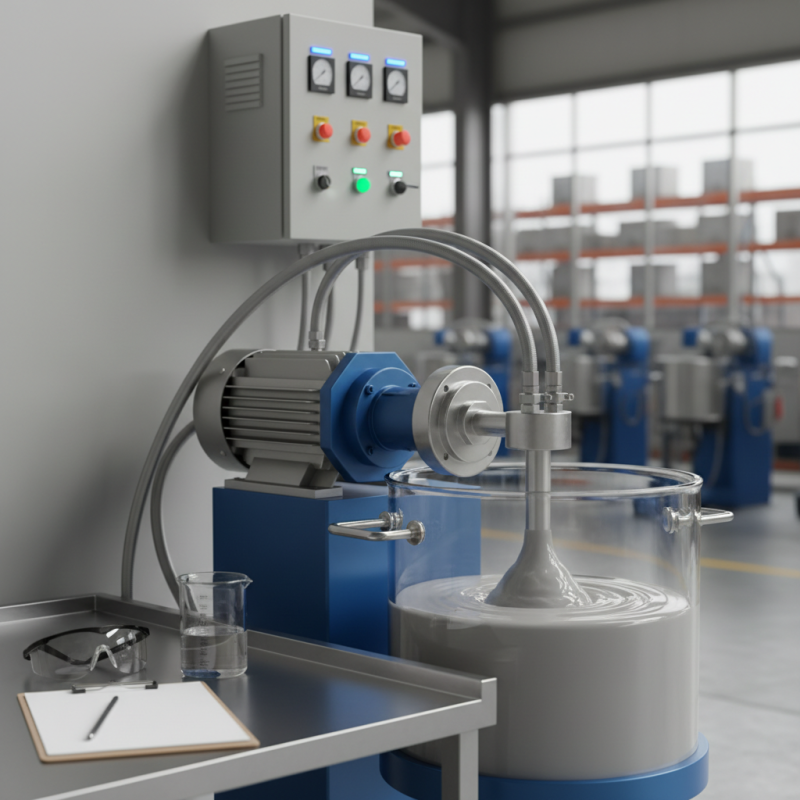
Choosing the right Mixing Pump can be a daunting task. As industry expert John Smith states, "A Mixing Pump’s performance is crucial for optimal results." The right choice can greatly affect efficiency and outcomes in various applications.
When selecting a Mixing Pump, consider the specific needs of your project. Different tasks require different capabilities. Factors like viscosity, flow rate, and power source must be examined critically. It’s common to overlook details like material compatibility, which can lead to costly mistakes.
Finding the perfect Mixing Pump is not only about performance. It involves understanding how it fits into your overall operation. Sometimes, the best choice isn't the most expensive. Reflecting on your requirements can help you make better decisions. Don't rush; take the time to evaluate all options.
Understanding the Different Types of Mixing Pumps Available in the Market
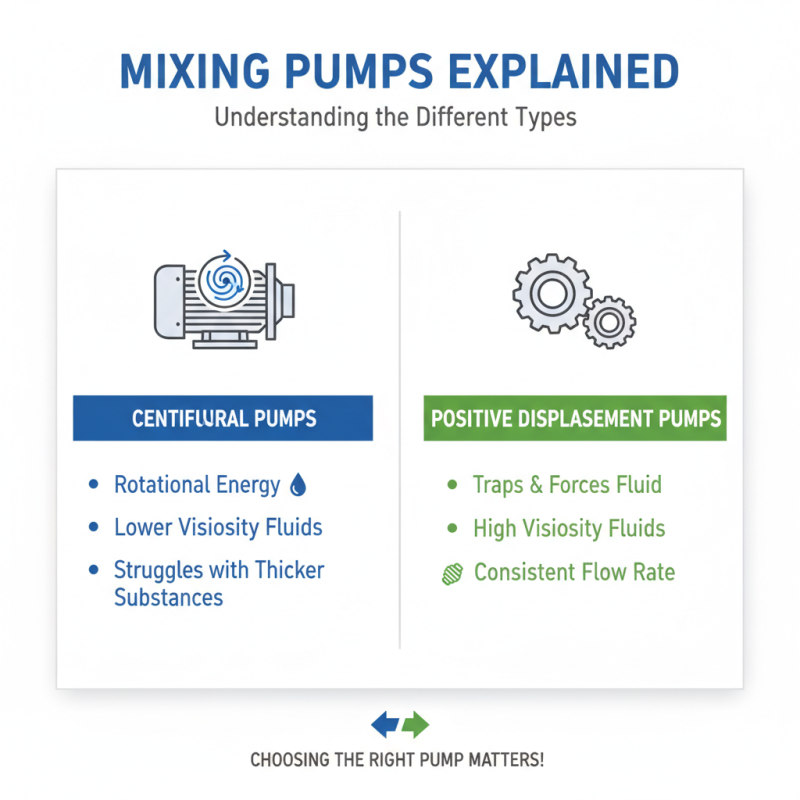
When selecting a mixing pump, understanding the various types available is crucial. There are several key categories, such as centrifugal pumps and positive displacement pumps. Centrifugal pumps rely on rotational energy. They are often preferred for fluid applications with lower viscosity. However, they can struggle with thicker substances.
Positive displacement pumps, on the other hand, excel with viscous fluids. They function by trapping a fixed amount of fluid and forcing it through the discharge. This type can be more challenging to control. Users must be cautious about pressure buildup. There are also diaphragm pumps, known for their ability to handle abrasive materials. They can be effective but sometimes require more maintenance.
In addition to these types, consider the material of the pump. Options range from stainless steel to plastic. Each has its advantages and disadvantages. The right choice often depends on the specific applications and the chemicals involved. Reflecting on these factors can help avoid costly mistakes. Assessing your needs carefully prevents selecting a pump that underperforms.
Key Specifications to Consider When Choosing a Mixing Pump
Choosing a mixing pump requires careful consideration of several key specifications. Start with pump capacity. Understand how much fluid you need to move. A small pump will limit your output, while a large one may waste energy. Think about the viscosity of the materials you’ll mix as well. High-viscosity substances need more power to mix effectively.
Next, examine the pump design. There are different configurations for different tasks. Some pumps have specific features for smooth mixing, while others focus on pressure. Ensure the design fits your application. Noise levels are another aspect that shouldn't be overlooked. A loud pump can disrupt work environments.
Lastly, consider maintenance needs. Some pumps require regular servicing, which can be a hassle. If you prefer low-maintenance options, make sure to do your homework. Remember, not every pump suits every job. It’s essential to reflect on your specific requirements. Mixing pumps are significant investments. Take the time to understand what works best for you.
Assessing the Viscosity and Density of Fluids for Pump Selection
When selecting a mixing pump, understanding the fluid's viscosity and density is crucial. Viscosity measures a fluid's resistance to flow. For example, honey has a high viscosity, while water has a low viscosity. This distinction impacts which pump can effectively mix the fluid.
Next, consider the density of the fluid. Dense fluids require more powerful pumps. For example, a thick slurry of concrete has a much higher density than plain water. A pump that works well for water may struggle with concrete. It's vital to assess these properties accurately. If you overlook them, the pump won't perform as needed.
Choosing the wrong pump can lead to many issues. A pump may overheat or fail to mix thoroughly. This might waste resources and time. Be aware of the specific characteristics of the fluid. Analyze them before making your choice. It’s a key step that shouldn't be rushed.
Determining the Desired Flow Rate and Pressure for Your Application
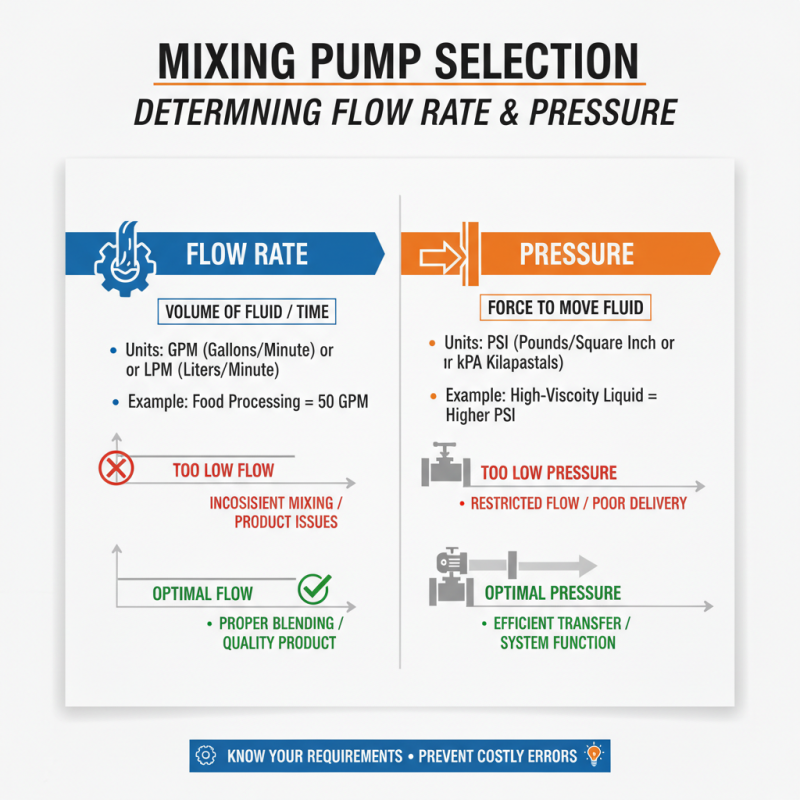
When selecting a mixing pump, understanding the desired flow rate and pressure is crucial for optimal performance. Flow rate refers to how much fluid the pump can handle, usually measured in gallons per minute (GPM) or liters per minute (LPM). For example, a food processing facility might need a pump that can manage 50 GPM. If the flow rate is too low, fluid ingredients won’t mix properly. This can lead to inconsistent products. Knowing your specific requirements can prevent costly errors.
Pressure is another vital aspect. It impacts how well the pump moves fluid through the system. Applications requiring high pressure may need different pumps than those for lower pressure tasks. If a system needs 100 PSI, but the selected pump only handles 60 PSI, the setup will fail. Be aware of potential mismatches. Think about your fluid's viscosity as well. Thicker substances require more pressure to move. Sketching out your system’s design can help visualize the necessary specifications.
Sometimes, achieving the perfect balance of flow and pressure requires tweaking. Don’t rush the decision. Take time to experiment with different setups. Awaiting feedback from initial runs can provide valuable insights. Each application is unique, and minor adjustments can make a significant difference. Consider the long-term implications of your choice. A poorly matched pump can lead to frequent repairs or replacements.
Evaluating Maintenance and Operational Costs of Mixing Pumps
When selecting a mixing pump, maintenance and operational costs are key factors. Regular maintenance can prevent costly breakdowns. It involves checking seals, bearings, and impellers. Neglecting these tasks can lead to inefficiencies. Over time, wear and tear accumulate, increasing energy consumption. This results in higher operational costs, which can harm your budget.
Consider the types of fluids you will be mixing. Viscosity impacts pump performance and wear. Choosing a pump that matches your specific needs is crucial. Pumps working harder than necessary are at risk. Inefficient mixing can create bottlenecks in production. Evaluate how often your pump will run. A continuous operation often demands more robust solutions.
Think about the long-term costs. Initial savings on a cheaper pump can lead to higher expenses later. Weigh upfront costs against potential maintenance. Don’t ignore the possibility of unplanned downtimes. Such events can halt production and result in extra costs. Reflect on whether you have considered all operational factors. This decision could shape your operations significantly.
How to Choose the Right Mixing Pump for Your Needs? - Evaluating Maintenance and Operational Costs of Mixing Pumps
| Pump Type |
Flow Rate (GPM) |
Power Requirement (HP) |
Operational Cost ($/hour) |
Maintenance Frequency (Months) |
Maintenance Cost ($/Year) |
| Centrifugal Pump |
100 |
5 |
1.50 |
6 |
300 |
| Gear Pump |
80 |
3 |
1.20 |
12 |
250 |
| Diaphragm Pump |
60 |
4 |
1.00 |
8 |
400 |
| Progressive Cavity Pump |
70 |
3.5 |
1.30 |
10 |
350 |
| Peristaltic Pump |
50 |
2 |
0.80 |
9 |
150 |