How to Choose the Right Methane Blower for Your Needs?
Choosing the right Methane Blower can be challenging. Experts in the field recognize this complexity. Dr. Emily Johnson, a leading consultant in gas systems, once said, "Selecting the correct blower requires careful consideration of your unique needs." This highlights the importance of understanding your specific application.
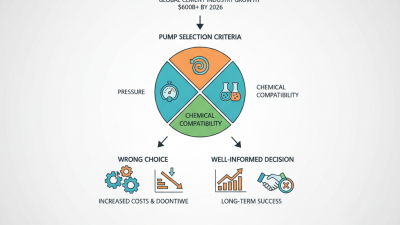
Methane Blowers are not one-size-fits-all. Each model varies in capacity, efficiency, and design. Users often overlook these differences. A wrong choice can lead to inefficiency or increased costs. For instance, if your operation requires high flow rates, opting for a low-capacity blower may hinder productivity.
It's essential to evaluate your operational requirements before purchasing. Consider factors like pressure, volume, and environmental conditions. Many overlook maintenance needs, which can affect long-term performance. Investing in a Methane Blower without proper research may lead to regrettable decisions later.
Understanding the Basics of Methane Blowers and Their Applications
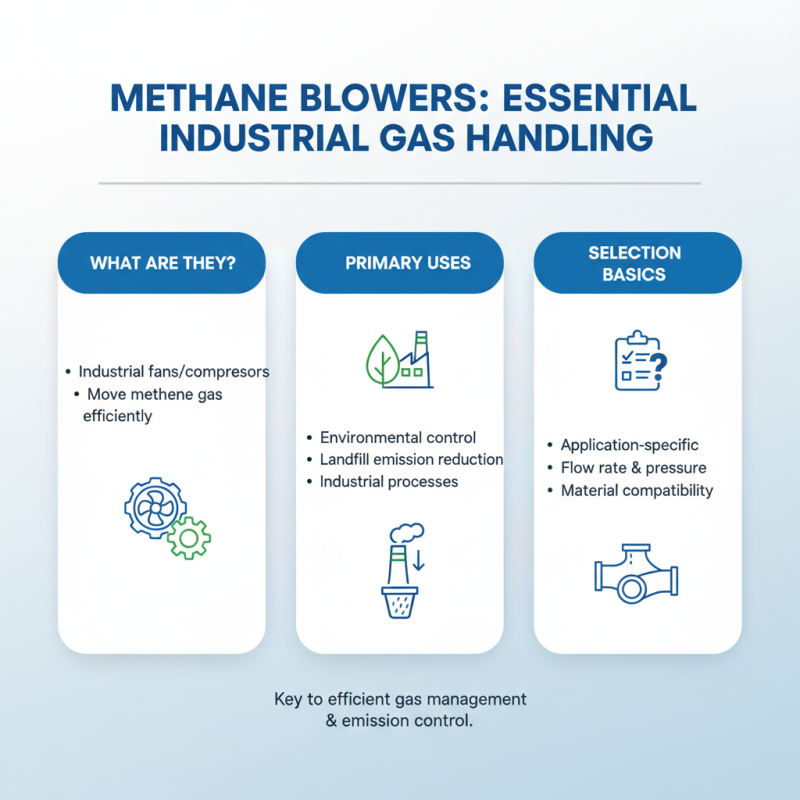
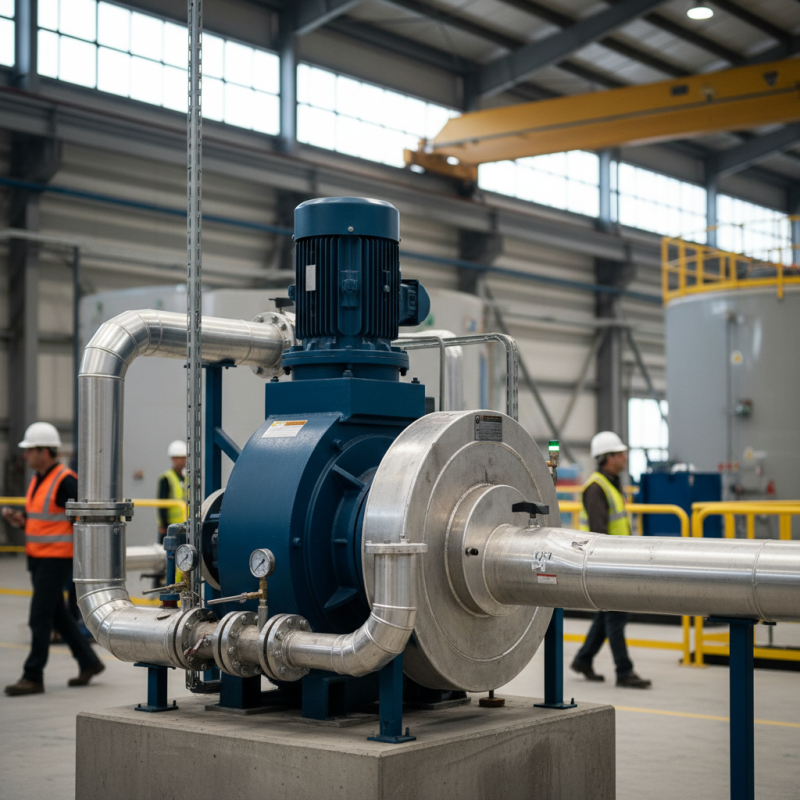
Methane blowers are essential in various industries, handling gas efficiently. They are often used in environmental applications, such as controlling methane emissions from landfills. Different applications require different specifications, so understanding the basics helps in selecting the right blower.
The performance of a methane blower depends on its design. Consider flow rate and pressure. A blower with higher flow may seem beneficial, yet it can also lead to excessive operational costs. Efficiency is crucial. Sometimes, low pressure can effectively manage gas without wasting energy.
Maintenance is another consideration. Regular checks ensure optimal performance. Users often overlook this aspect, which can lead to inefficiencies. Choosing a blower that balances power and maintenance can be challenging. Reflecting on these factors can aid in making a better decision, ensuring you meet your specific needs without overspending.
Types of Methane Blowers: A Comprehensive Overview
When selecting a methane blower, understanding the types available is vital. There are primarily three categories: positive displacement blowers, regenerative blowers, and centrifugal blowers. Each type offers different performance characteristics suited to specific applications. For instance, positive displacement blowers are known for delivering consistent flow and pressure. They are often preferred in industrial settings where reliability is critical.
According to a recent industry report, the global market for methane blowers is expected to grow significantly. By 2025, demand could rise by 6% annually, primarily driven by increased natural gas applications. Regenerative blowers, with their compact design, are gaining popularity for less demanding applications. Their efficiency is notable in smaller-scale operations, where cost-effectiveness is essential.
However, selecting the right type involves consideration of not just efficiency but also factors like maintenance and installation costs. Many operators face difficulties in determining the right fit for their needs. Technical specifications can vary greatly, leading to potential miscalculations. Misunderstanding these details could result in suboptimal performance. This is a common area where industry players tend to stumble, as investing time in research is often overshadowed by urgency in operations.
Types of Methane Blowers Performance Comparison
Key Factors to Consider When Selecting a Methane Blower
Choosing the right methane blower can be challenging. You need to consider several critical factors. First, understand the required flow rate. This measurement indicates how much gas the blower can move. A higher flow rate is essential for larger applications. However, oversizing can lead to inefficiencies and increased costs.
Next, pay attention to pressure specifications. The right pressure helps maintain operational efficiency. If you select a blower with too low pressure, it may not meet system demands. Conversely, excessive pressure can cause damage. Additionally, consider the noise levels. Excessive noise can lead to worker discomfort. Aim for a blower that balances performance and noise reduction.
Durability is another key factor. Methane blowers must withstand harsh environments. Look for models made from robust materials. Maintenance requirements should also be evaluated. A blower needing frequent repairs can disrupt operations. Finding the right balance is crucial. Take time to review your specific needs and constraints. Think critically about both your current and future requirements.
How to Choose the Right Methane Blower for Your Needs? - Key Factors to Consider When Selecting a Methane Blower
| Factor |
Description |
Importance |
Recommended Range |
| Flow Rate |
Amount of gas the blower can handle, usually measured in CFM. |
High |
100 - 5000 CFM |
| Pressure |
The pressure level the blower can achieve, measured in PSI. |
High |
1 - 20 PSI |
| Motor Power |
The power of the motor driving the blower, usually in horsepower. |
Medium |
5 - 50 HP |
| Noise Level |
The operational noise of the blower, measured in decibels (dB). |
Medium |
60 - 90 dB |
| Material |
The materials the blower is made from, impacting durability and corrosion resistance. |
High |
Steel, Aluminum, or Composite |
| Portability |
Ease of moving the blower, important for flexible applications. |
Medium |
Wheeled/Stationary options |
| Maintenance |
Frequency and ease of maintenance required to keep the blower operational. |
High |
Regular/Scheduled |
Evaluating Performance Specifications for Your Methane Blower Needs
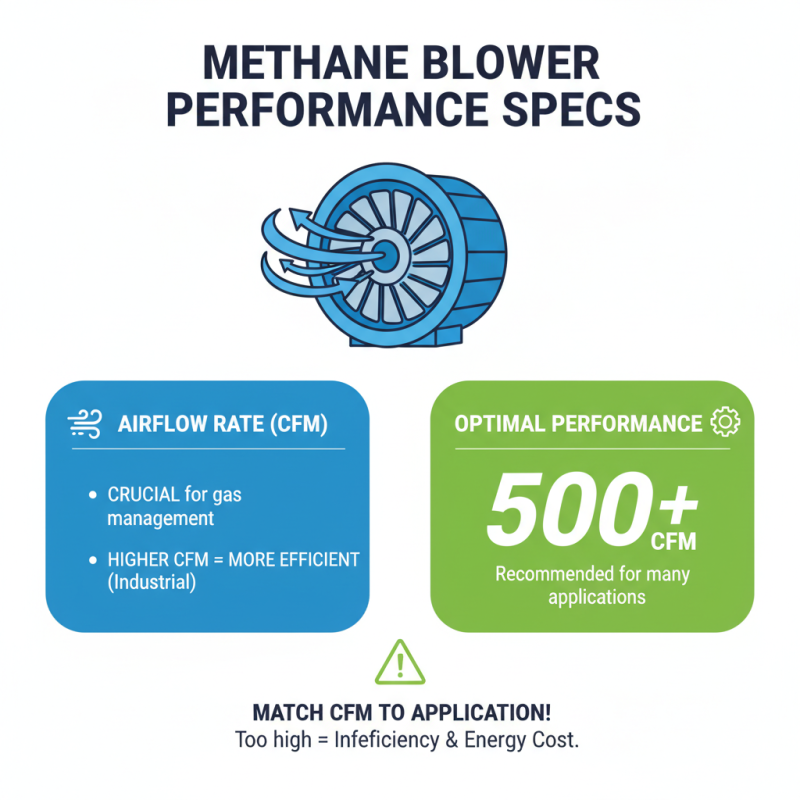
When choosing a methane blower, performance specifications are crucial. Assess the blower's airflow rate, typically measured in cubic feet per minute (CFM). A blower with a high CFM is essential for efficient gas management in industrial settings. Reports show that blowers with an airflow rate exceeding 500 CFM often provide optimal performance. However, matching the CFM to your specific application is vital, as too high a rate can lead to inefficiencies and increased energy costs.
Another important specification is the pressure rating. Choose a blower with a suitable pressure range for your needs. Many applications require pressure levels between 3 to 15 psi. Operating outside this range can reduce effectiveness. For instance, a report from the industry indicates that blowers operating at 7-10 psi tend to balance efficiency and performance better.
Consider noise levels, too. Noise can be an overlooked factor. Blowers operating above 85 decibels may require soundproofing solutions. Research suggests that quieter models are becoming popular in urban settings. Ultimately, aligning performance specifications with your operational needs is essential for long-term satisfaction.
Maintenance and Efficiency Tips for Optimal Methane Blower Operation
Choosing the right methane blower is critical for efficient operation. Regular maintenance plays a vital role in performance and longevity. Keeping the blower clean may seem simple, yet it's often overlooked. Routine inspections can prevent small issues from becoming major problems.
One useful tip is to regularly check the filters. Dirty filters can restrict airflow and reduce efficiency. Adhering to manufacturer guidelines can help in determining the right schedule for replacements. Statistical reports suggest that up to 30% of blower efficiency can be lost due to clogged filters.
Also, monitoring vibration levels can be beneficial. Excessive vibrations are signs of misalignment or wear. Reports indicate that addressing these concerns early can extend equipment life by over 50%. It’s essential to adjust settings based on operational feedback. Ignoring these signals could lead to costly downtime. Always keep an ear out for unusual noises; they can be indicators of deeper issues.