How to Choose the Best Roots Blower for Your Business?
Choosing the right Roots Blower for your business is crucial for efficiency and productivity. These machines are essential in various industries, including wastewater treatment, pneumatic conveying, and industrial processes. The right blower can improve operations and reduce costs significantly.
When considering a Roots Blower, factors like airflow, pressure capacity, and energy efficiency should be at the forefront. You want a unit that aligns with your specific applications. Many businesses overlook the importance of maintenance and serviceability, which can lead to costly downtimes.
It's essential to consult with experts in the field. Their input can guide you towards making an informed decision. Without expert advice, you might find yourself dealing with unexpected challenges. It's better to invest time upfront than to rush into a choice that can impact your business long-term.
Understanding the Basics of Roots Blowers and Their Applications
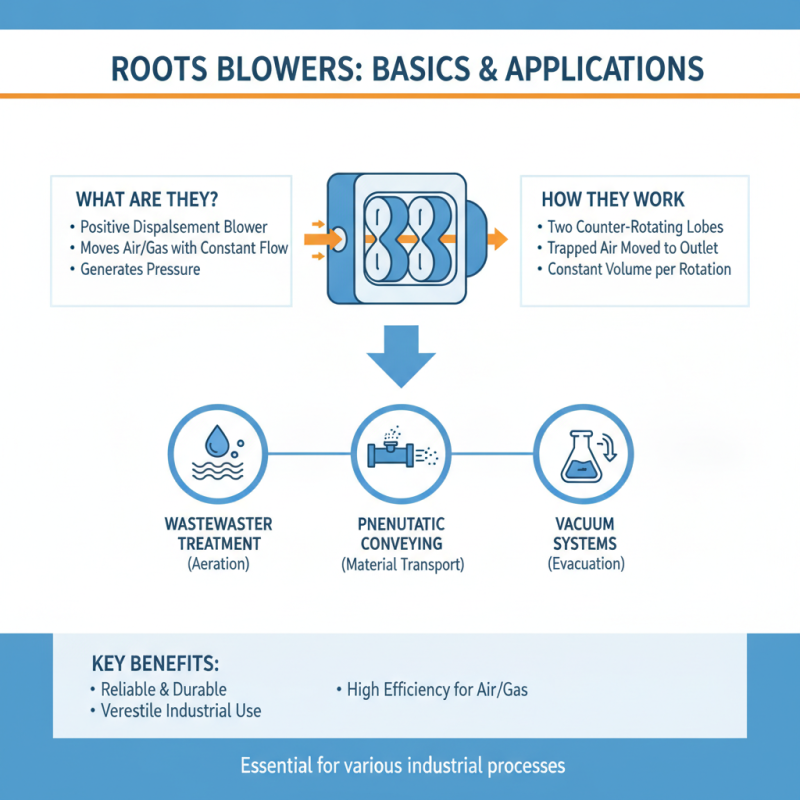
Roots blowers, also known as positive displacement blowers, play a crucial role in various industries. They are designed to move large volumes of air or gas with constant flow and pressure. This makes them essential for applications like wastewater treatment, pneumatic conveying, and vacuum systems. Understanding their mechanics helps businesses choose the right model for their needs.
These blowers operate using two synchronized rotors that trap air and push it through the system. Their efficiency is influenced by factors like flow rate, pressure, and noise levels. Businesses should consider these aspects when evaluating potential options. Proper sizing is vital; an oversized blower may lead to inefficiencies and increased operational costs. Often, people overlook this detail, leading to regret down the line.
Installation and maintenance also require attention. Regular check-ups can prevent unexpected failures and costly downtime. Users must also understand the noise implications. Some blowers are noisier than others, which could affect workplace conditions. There’s no perfect solution; every system has trade-offs. Balancing these aspects ensures a better fit for your specific operational needs.
Key Factors to Consider When Selecting a Roots Blower for Your Business
When selecting a Roots blower for your business, understanding key factors is essential. Consider the application first. Roots blowers are commonly used in various industries, including wastewater treatment and pneumatic conveying. Each application may require different specifications. In a report by the International Journal of Engineering Research, it was noted that efficiency can vary by up to 30% based on the application type.
Next, examine the flow rate and pressure requirements. The flow rate impacts system efficiency and operational costs. A blower operating below required flow can create bottlenecks. According to a study, improper sizing contributes to energy waste, potentially increasing costs by 15%. Selecting the correct pressure range is equally important to avoid overloading.
Tips: Always assess the noise level. Some industrial environments have strict regulations. A quieter blower may cost slightly more but can save on compliance expenses. Additionally, consider maintenance complexity. Regular maintenance is crucial for efficient operation. A more complex system might lead to higher downtime.
Reflect on durability and build quality. Poor quality materials may lead to frequent repairs. An investment in a reliable unit pays off in the long term. Evaluate vendor support and warranty terms. This adds an extra layer of security, ensuring you have assistance when needed.
Assessing the Efficiency and Performance Metrics of Roots Blowers
When selecting a Roots blower, it's crucial to evaluate its efficiency and performance metrics. Efficiency directly impacts operating costs and energy consumption. A high-quality Roots blower should maintain performance while minimizing energy use. Look for blowers with operational efficiency ratings. These metrics give insights into how effectively the blower performs under various conditions.
It’s also important to assess flow rates and pressure capabilities. Flow rate indicates how much air the blower can move. High flow rates are necessary for large-scale applications. However, too much flow can lead to inefficiencies and higher energy costs. Pressure ratio is equally important. It allows you to understand how the blower will handle specific system requirements.
While it’s easy to focus solely on specifications, real-world performance can differ. Some blowers may not perform as expected in practice. User feedback is invaluable here, as it provides insights beyond statistics. Pay attention to reliability metrics and maintenance needs, as these aspects can significantly affect your operations over time. Understanding these factors can lead to better decisions for your business needs.
How to Choose the Best Roots Blower for Your Business? - Assessing the Efficiency and Performance Metrics of Roots Blowers
| Model |
Airflow (CFM) |
Power Consumption (HP) |
Max Pressure (psi) |
Efficiency (%) |
Noise Level (dB) |
Weight (lbs) |
| Model A |
500 |
10 |
15 |
85 |
70 |
120 |
| Model B |
600 |
12 |
18 |
88 |
68 |
150 |
| Model C |
700 |
14 |
20 |
90 |
75 |
180 |
| Model D |
800 |
16 |
22 |
92 |
72 |
200 |
Evaluating Maintenance Needs and Durability for Long-Term Use
When selecting a roots blower, focusing on maintenance and durability is critical for long-term success. According to a report from the Industrial Blower Association, nearly 30% of blowers fail due to inadequate maintenance. Regular inspection of components can significantly extend service life. A blower with easily replaceable parts reduces downtime, allowing your operations to remain efficient.
Invest in a blower designed to withstand harsh conditions. The right materials—like cast iron and stainless steel—are essential for durability. Over 60% of industries require blowers to handle corrosive environments. Choosing a model with a proven track record can help mitigate costly repairs.
**Tip:** Establish a routine maintenance schedule. This can catch issues early and save you money in the long run.
Pay attention to warranties and service agreements. A reliable product often comes with strong customer support. Be aware that neglecting these aspects may lead to unexpected costs and operational disruptions.
**Tip:** Review user feedback and reliability ratings. This information can guide your investment towards a blower that meets your needs and can endure the test of time.
Comparing Brands and Models: Finding the Right Fit for Your Budget
When selecting a roots blower for your business, model comparison is crucial. Different brands offer unique features, impacting performance and durability. Understanding your specific needs can help narrow down the options. Each model varies in efficiency, noise levels, and maintenance requirements. Analyze these factors before making a decision.
Tips: Consider the volume of air your operations require. Larger capacities can lead to higher energy costs. Evaluate the maintenance schedule for each model. Regular upkeep can save you from costly repairs down the line. Check user reviews to gauge reliability and real-world performance.
The budget plays a key role in brand selection. Prices can vary significantly, making it important to assess long-term value over initial costs. Some models may seem cheaper but could entail hidden expenses. Always factor in potential maintenance costs and energy consumption. Striking the right balance between cost and quality is essential for sustained operations.