Best Cooling Centrifugal Fan Options for Global Buyers?
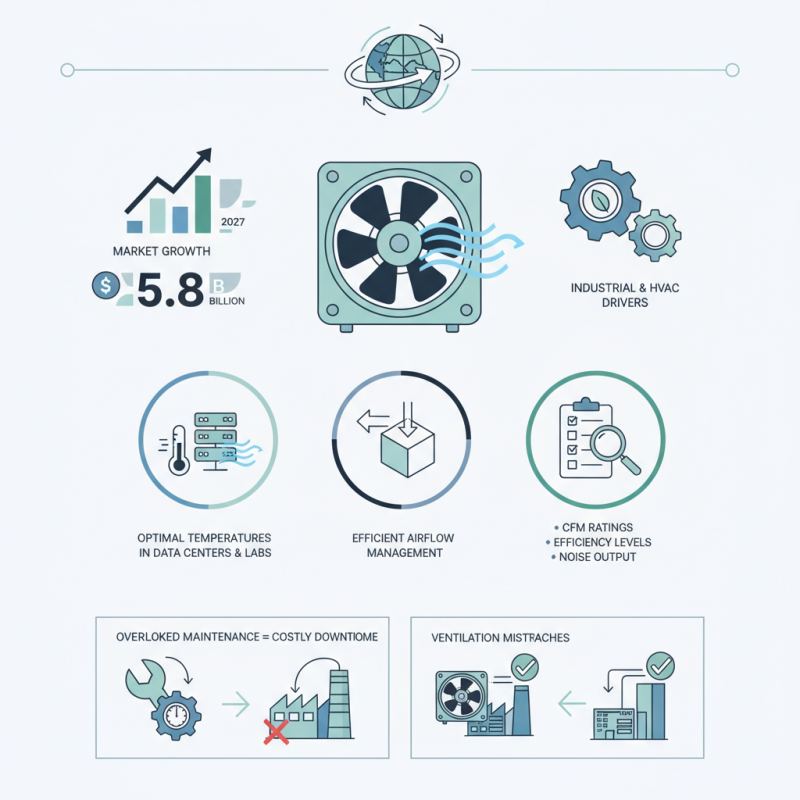
The demand for Cooling Centrifugal Fans is rising globally, driven by industrial growth and advanced HVAC solutions. A report from Grand View Research shows that the market size for centrifugal fans is projected to reach $5.8 billion by 2027. This growth illustrates their crucial role in numerous applications, from manufacturing to commercial buildings.
Cooling Centrifugal Fans offer efficient airflow management. They help maintain optimal temperatures in sensitive environments like data centers and laboratories. However, selecting the right fan requires understanding different specifications and use cases. Industry experts suggest considering factors such as CFM ratings, efficiency levels, and noise output.
Despite these advancements, users often overlook maintenance. Regular checks on fan components can prevent costly downtime. Ventilation needs can vary greatly, leading to potential mismatches between fan capacity and application requirements. Increasing awareness of these aspects will enhance performance. Failing to address inefficiencies in fan selection can have lasting impacts. Understanding these nuances is critical for both buyers and suppliers in this expanding market.
Understanding Centrifugal Fans: Types and Mechanisms
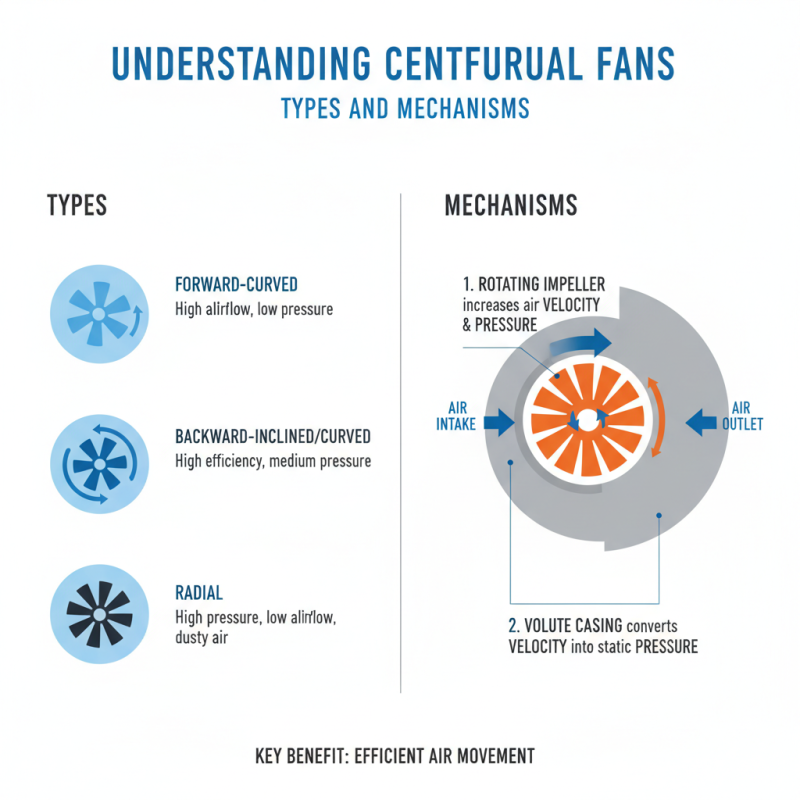
Centrifugal fans are essential in various applications, providing efficient air movement. Understanding their mechanisms is crucial for selecting the right type. These fans operate by using a rotating impeller to increase air pressure and flow. The airflow is directed through a volute casing, transforming kinetic energy into pressure energy.
There are different types of centrifugal fans, each suited for specific tasks. Backward-curved blades are ideal for high efficiency in light dust applications. Forward-curved blades offer high volume delivery at lower pressures, commonly found in residential ventilation systems. Radial fans excel in high-pressure applications, making them suitable for industrial settings. Each type has unique benefits, yet choosing incorrectly can lead to inefficiencies.
Evaluating the right centrifugal fan involves considering your specific needs. The required airflow, pressure, and environmental conditions are vital factors. It's important to reflect on the balance between efficiency and noise levels. In some cases, high-performance fans can produce unwanted sound. Striving for the best option often means weighing efficiency against comfort levels.
Key Features to Consider in Cooling Centrifugal Fans
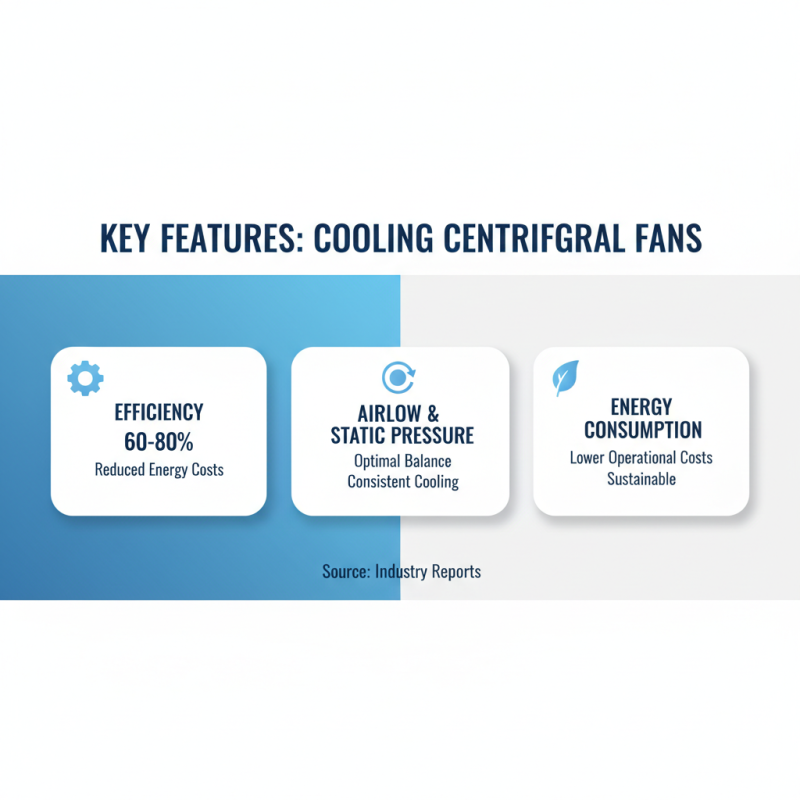
When selecting cooling centrifugal fans, key features play a critical role. Efficiency is paramount. According to industry reports, centrifugal fans can operate at 60-80% efficiency. This range affects energy consumption and operational costs. Look for fans that strike a balance between airflow and static pressure. Ideally, the fan should maintain high airflow while minimizing energy use.
Noise levels are another important consideration. The average decibel level for a high-quality fan is around 50-70 dB. Fans that exceed this range may cause disturbances in sensitive environments. Additionally, pay attention to the design. Fans with blade geometry optimized for airflow tend to be more effective. Data indicates that well-designed blades can improve performance by 20%.
Lastly, durability is essential. Materials should withstand various environments. Fans made from corrosion-resistant materials enhance longevity. However, some fans may struggle in extreme conditions, which could lead to premature failure. Buyers often overlook operational temperature ranges, underestimating their importance in fan selection. Keep these parameters in mind for optimal performance.
Top Brands and Products for Global Buyers
When looking for the best cooling centrifugal fans, buyers must pay attention to various brands and products. Key factors include airflow efficiency, noise levels, and durability. Different environments require specific features. For instance, industrial settings often need heavy-duty options that can handle high demands. Meanwhile, residential spaces might prioritize quieter models that still deliver optimal performance.
Choosing from top brands provides an opportunity to leverage expert engineering and customer insights. Some brands are renowned for their innovative technology, while others focus on affordability without sacrificing quality. It's crucial to research product specifications. User reviews can reveal quirks and potential issues. Not all fans perform well in every setting. The best cooling solution often requires trial and error.
In addition to mainstream options, niche products can offer unique benefits. Specialized fans may focus on energy efficiency or compact designs. It's worth exploring customer support as part of the purchasing experience. Reliable brands often offer warranties and responsive service. Finding the right fan may involve assessing personal needs and potential adjustments. This process can lead to a more informed choice and better satisfaction with the purchase.
Applications of Cooling Centrifugal Fans in Various Industries
Cooling centrifugal fans play a critical role across various industries. In HVAC systems, they improve air circulation and temperature regulation. According to the International Energy Agency (IEA), efficient cooling systems can reduce energy consumption by up to 40%. This efficiency is vital, especially in large commercial spaces where air quality impacts productivity.
In manufacturing, cooling fans help protect equipment from overheating. The American Society of Mechanical Engineers (ASME) reports that equipment failure due to excess heat can cost companies millions annually. These fans ensure machines operate within optimal temperature ranges, enhancing their lifespan and performance.
Data centers also rely on cooling centrifugal fans to maintain appropriate temperatures. The Uptime Institute indicates that 30% of energy usage in data centers is linked to cooling. As industries strive for sustainability, efficient cooling solutions have become more essential. However, not all fans are equally suitable. Choosing the right cooling fan requires nuanced understanding and consideration of specific applications.
Best Cooling Centrifugal Fan Options for Global Buyers
Cost Analysis and Value for Money in Fan Selection
When selecting a cooling centrifugal fan, understanding cost versus value is crucial. Industry reports indicate that high-quality fans can range from $150 to $1,200, depending on size and capacity. Buyers should consider how these price points reflect durability and efficiency. A fan that offers lower initial costs may lead to higher energy consumption. This is a critical aspect when calculating long-term expenses.
Additionally, features such as noise levels and airflow efficiency play significant roles in value assessment. Some fans are designed to minimize sound, which is vital in settings like offices or homes. Market data suggests that fans with a noise level below 50 decibels can enhance comfort significantly. Considering the size of the space and airflow requirements also aids in making informed decisions. In practice, it is important to balance upfront costs with potential operating costs over years.
Reflecting on these choices often leads to reconsideration of priorities. For instance, a cheaper fan might not meet efficiency standards, causing regret over time. It is essential for buyers to examine their specific needs against potential options carefully. Doing so can provide a better understanding of which fans offer true value for money in the long run.
Best Cooling Centrifugal Fan Options for Global Buyers
| Fan Type |
Airflow (CFM) |
Power Consumption (W) |
Noise Level (dB) |
Cost (USD) |
Value for Money (0-10) |
| Centrifugal Fan A |
2500 |
150 |
60 |
200 |
8 |
| Centrifugal Fan B |
3000 |
180 |
55 |
250 |
9 |
| Centrifugal Fan C |
3500 |
200 |
50 |
300 |
9.5 |
| Centrifugal Fan D |
2800 |
160 |
65 |
220 |
7.5 |
| Centrifugal Fan E |
4000 |
220 |
48 |
350 |
10 |