Top 10 Benefits of Roots Blowers for Industries and Applications?
In industrial applications, the importance of a Roots Blower cannot be overstated. Renowned expert Dr. John Smith, a leading engineer in pneumatic systems, once stated, "Roots Blowers are the heartbeat of several processes." This highlights their essential role in various industries, from wastewater treatment to food processing.
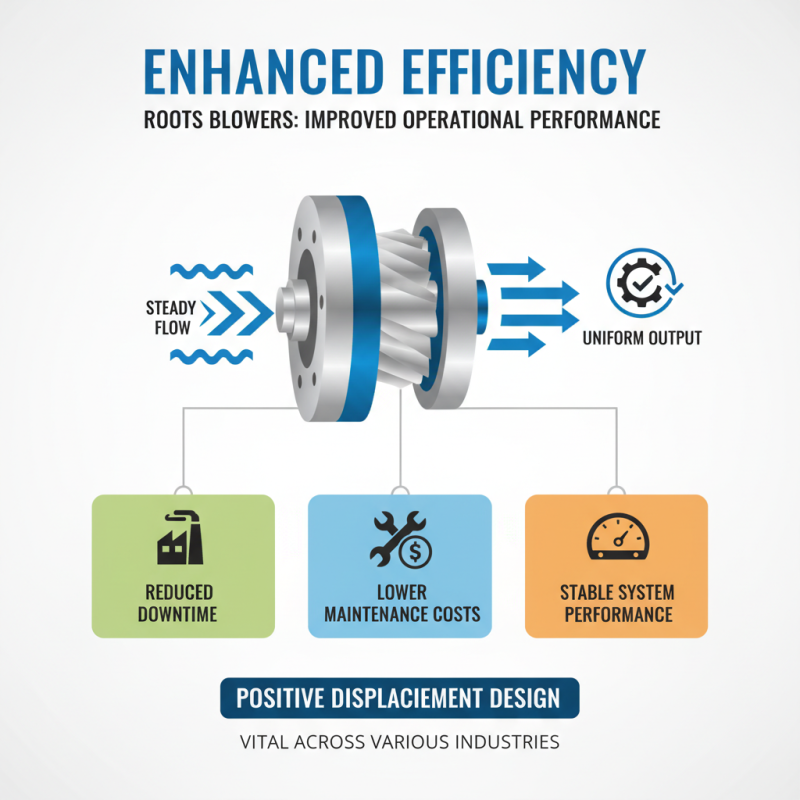
Roots Blowers provide several distinct advantages. They deliver high efficiency and reliable performance. Their robust design ensures durability, allowing them to function effectively under demanding conditions. These blowers also maintain consistent airflow, which is critical in many applications. The reduced noise levels compared to other systems enhance workplace safety and comfort.
However, it is essential to recognize some challenges as well. Poorly maintained units can lead to inefficiencies and increased energy consumption. Users must balance performance with regular upkeep to enjoy the full benefits. Understanding both strengths and weaknesses allows companies to make informed choices about their air handling solutions.

Overview of Roots Blowers and Their Functionality
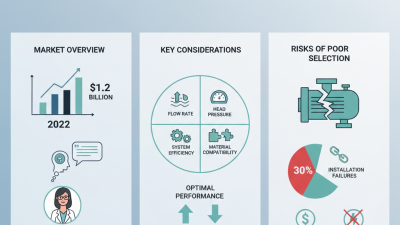
Roots blowers are essential in many industrial applications. They function by moving air or gas in a positive displacement manner, which means they push the gas with consistent volume and pressure. This characteristic makes them highly effective for applications requiring stable airflow. According to a recent industry report, the global roots blower market is expected to grow at a CAGR of 5.4% from 2021 to 2026, highlighting their increasing relevance.
These blowers are widely used in wastewater treatment plants, pneumatic conveying, and various manufacturing processes. Their design allows for high efficiency and low operational costs. They operate effectively across various pressure ranges, providing versatility. Moreover, they can handle moist and dirty gases unlike many other technologies. Industry benchmarks indicate that roots blowers can reduce energy consumption by up to 30% compared to traditional compressor systems.
While roots blowers have numerous advantages, they also come with challenges. The maintenance needs can be unpredictable. Over time, wear and tear may occur on rotors and housing, leading to efficiency losses. Additionally, conditions such as temperature and gas composition can impact performance. A comprehensive understanding of these factors is crucial for optimizing their use in industrial settings.
Top 10 Benefits of Roots Blowers for Industries and Applications
| Benefit |
Description |
Applications |
| High Efficiency |
Roots blowers provide high air displacement with low energy consumption. |
Wastewater treatment, pneumatic conveying |
| Durability |
Designed for long-lasting performance even in demanding environments. |
Industrial vacuum systems, material handling |
| Low Maintenance |
Requires less frequent maintenance compared to other blower types. |
Food processing, chemical industries |
| Versatility |
Can handle a wide range of gases and applications. |
Packaging, air drying |
| Consistent Performance |
Delivers steady airflow regardless of pressure changes. |
Cement industry, HVAC systems |
| Noise Reduction |
Operates quieter compared to other types of blowers. |
Laboratories, food and beverage |
| Compact Design |
Space-efficient, allowing for easier installation in various settings. |
Manufacturing plants, automotive applications |
| Energy Savings |
Can significantly reduce operating costs due to high efficiency. |
Power generation, pharmaceutical industries |
| Environmental Benefits |
Lower emissions contribute to better environmental compliance. |
Waste management, green technologies |
| Flexibility |
Can be tailored to specific operational requirements and conditions. |
Mining, agriculture |
Key Industries Utilizing Roots Blowers and Their Specific Needs
Roots blowers are critical in various industries, each with unique needs. In wastewater treatment, for example, these blowers aid aeration processes. They ensure efficient mixing of water and activated sludge. Consistent airflow helps in breaking down waste materials. However, maintenance challenges can arise, requiring expert attention.
In the food processing sector, roots blowers provide necessary air for fermentation. This is essential for producing products like yogurt and beer. Precise airflow supports a stable fermentation environment. Nonetheless, achieving optimal performance may require regular monitoring and adjustments to the system, which some facilities may find challenging.
In the petrochemical industry, roots blowers transport gases effectively. They ensure safety by maintaining pressure and preventing leaks. However, the high temperatures in these applications can lead to wear and tear. Often, companies need to invest in more robust solutions to avoid downtime. Industrial sectors, therefore, must carefully consider their specific requirements when implementing roots blower technology.
Top 10 Benefits of Roots Blowers for Industries
Cost-Effectiveness: Financial Benefits of Implementing Roots Blowers
Roots blowers are increasingly recognized for their cost-effectiveness in various industries. A recent report highlights that companies can see a reduction in operational costs by up to 30% when switching to Roots blower systems. The design of these blowers allows for efficient air and gas handling, minimizing energy consumption. Over time, this translates to significant savings on utility bills. Precision in their operation enables industries to optimize production flows and reduce waste.
The initial investment in Roots blowers may seem substantial. However, the long-term financial benefits often outweigh the upfront costs. Industries relying on pneumatic conveying systems or waste gas treatment can particularly benefit from employing Roots blowers. Reports indicate that these systems can last longer than many traditional alternatives, reducing maintenance and replacement expenses.
Tips: Regular maintenance is crucial to ensure efficiency. Schedule evaluations to avoid costly breakdowns. Consider the specific needs of your operation before implementing a Roots blower, as not all models suit every application. Explore different configurations available to find the most suitable option for your industry.
Environmental Impact: Roots Blowers and Sustainable Practices in Industry
Roots blowers play a significant role in various industrial applications. Their efficiency can contribute to more sustainable practices. By optimizing air flow and reducing energy consumption, they help lower greenhouse gas emissions. Certain designs promote better filtration processes. This aligns with the industry's growing focus on environmental responsibility.
While Roots blowers are efficient, they are not devoid of drawbacks. Improper maintenance can lead to inefficiencies and increased emissions. Over time, wear and tear can affect performance. Regular checks are essential to ensure optimal operation. It is important not to overlook this aspect, as sustainability requires constant vigilance.
Companies are increasingly focusing on integrating Roots blowers within their green initiatives. This shift reflects a commitment to both innovation and environmental stewardship. However, industry standards are continually evolving. Adapting to these changes is critical for long-term success. Aligning operations with sustainable practices may not always be straightforward, but it's a necessary journey.