Global buyers are entering 2026 with stronger pressure to improve ventilation, cooling, and energy performance. The International Energy Agency reports that buildings consume about 30% of global final energy and create approximately 26% of energy-related emissions. Cooling demand is also rising rapidly in warm regions. The IEA’s Future of Cooling report warns that cooling electricity demand could more than triple by 2050 without major efficiency improvements.
This guide examines the leading Introduced Air Fan types expected to attract attention in 2026. Axial fans suit high-volume, low-pressure movement, while centrifugal fans support higher-pressure duct systems. Mixed-flow fans offer a practical middle option. HVLS fans can move air across large warehouses, workshops, and retail spaces with relatively low operating speed. Compact EC-motor fans may also gain wider adoption because electronic commutation can reduce energy waste and maintenance demands.
Performance depends on the application. It is not that simple. The U.S. Department of Energy emphasizes motor efficiency, airflow control, and proper equipment sizing in commercial systems. ASHRAE Standard 62.1 also connects ventilation design with indoor air quality, occupancy, and contaminant control. Buyers should therefore compare airflow, static pressure, noise, motor type, ingress protection, controls, service access, and regional certification requirements. Some market forecasts appear optimistic, and real results may differ because installation quality is often overlooked. A well-selected fan still performs poorly when ducts are restricted, filters are blocked, or controls are incorrectly configured. This overview provides a practical starting point for comparing 2026 fan technologies with greater confidence.
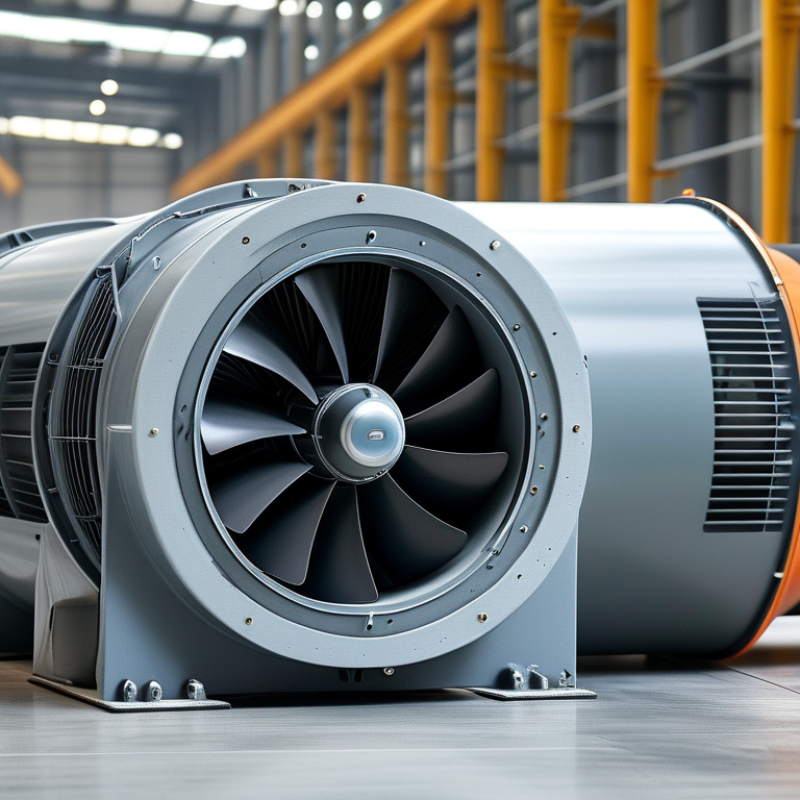
Air fans move air by converting motor power into velocity and pressure. Axial fans push air parallel to the shaft, making them suitable for high airflow and low resistance. Centrifugal fans redirect air radially and usually handle higher static pressure. Mixed-flow designs sit between these operating principles.
The duty point matters more than the fan label. It combines required airflow and system pressure, such as 18,000 m³/h at 650 Pa.
The U.S. Department of Energy reports that fan systems can represent up to 20% of industrial electricity use (Improving Fan System Performance: A Sourcebook for Industry). Small pressure errors can therefore create large operating costs. Measure filters, ducts, dampers, and grilles before selecting the motor.
Efficiency deserves careful checking. The European Commission’s Ecodesign work identifies ventilation equipment as a significant electricity-use category in buildings.
Ask for tested performance under ISO 5801 or AMCA 210 conditions, not only a catalogue maximum. Consider variable-speed control, because real demand rarely stays constant. EC motors may reduce control losses, but compatibility and service access still require inspection.
Noise can change purchasing decisions. Check sound power data across octave bands, especially near offices or residential areas.
Dust, humidity, temperature, corrosion, and outdoor exposure also affect housing and impeller materials. I have seen “efficient” selections fail after ignoring dirty filters and poor maintenance access.
A quieter fan with lower peak airflow may perform better in practice. Recheck the assumptions.
Axial air fans move air parallel to the rotating shaft, using blades inside a cylindrical housing. Their structure is simple: an impeller, motor, guard, frame, and optional diffuser. This design supports high airflow with relatively low pressure. It suits warehouses, tunnels, cooling towers, agricultural buildings, and industrial ventilation systems. Tight spaces benefit most.
The International Energy Agency reports that electric motor-driven systems consume about 46% of global electricity. Fan selection therefore affects operating costs beyond the purchase price. Axial fans can deliver strong volume flow efficiently when resistance is limited. Performance depends on blade pitch, diameter, rotational speed, air density, and system pressure. AMCA Publication 211 provides procedures for rating airflow, pressure, power, and efficiency. Buyers should request certified test conditions, not only catalog airflow.
Real installations are less perfect. Dust buildup changes blade balance and reduces output. A poorly sized fan may create noise, turbulence, or excessive power demand. Field measurements often reveal this gap. Compare measured airflow, static pressure, vibration, and sound levels after installation. Variable-speed control can improve adjustment, but operation below the stable range may reduce performance. The U.S. Department of Energy’s fan-system guidance also stresses system resistance and duct design, not fan efficiency alone. Selection remains a practical judgment, not a spreadsheet answer.
2026 Top Introduced Air Fan Types for Global Buyers
Centrifugal Air Fans: Designs, Advantages, and Typical Uses
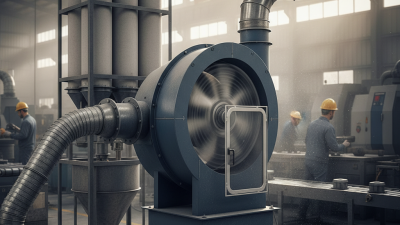
Centrifugal air fans move air through a rotating impeller and change its direction by roughly 90 degrees. Their scroll housing converts velocity into useful static pressure. This design suits ducted systems, filtration units, boilers, drying lines, and dust-control equipment. Forward-curved blades offer high airflow in compact spaces. Backward-inclined blades usually provide better efficiency and stable operation. Radial blades handle heavier dust, but they can be noisier.
The European Commission’s preparatory study on fans estimated European fan electricity use at about 344 TWh in 2015. That figure shows why fan selection deserves engineering attention. A correctly sized centrifugal fan can reduce throttling losses, especially when paired with variable-speed control. ISO 5801 supports standardized airflow and pressure testing. AMCA laboratory methods also help buyers compare performance beyond attractive catalog figures. Measured efficiency matters more than advertised volume.
Site conditions still decide the practical result. A kitchen exhaust system needs corrosion resistance and easy cleaning. A cement plant may require abrasion-resistant construction and a wider safety margin. Buyers should check operating point, sound level, motor efficiency, inlet temperature, and maintenance access. Pressure losses are often underestimated. I have seen systems selected for peak demand, then operated far below it. That choice works, but wastes energy. A small design review can expose the mistake. Performance can drift when filters clog, belts loosen, or dampers remain partly closed.
A practical comparison of widely specified centrifugal fan designs for industrial, commercial, and process-air applications
| Centrifugal Fan Type | Impeller and Housing Design | Typical Airflow Range | Typical Pressure Range | Approximate Peak Efficiency | Main Advantages | Typical Uses |
|---|---|---|---|---|---|---|
| Backward-Curved Fan | Backward-curved blades with a scroll housing; blades may be single-thickness or airfoil-shaped. | 2,000–250,000 m³/h | 500–3,000 Pa | 75–88% | High efficiency, stable operation, moderate noise, and relatively low power demand. The non-overloading power characteristic is useful for variable-airflow systems. | Building ventilation, air-handling units, clean-air process ventilation, cooling systems, and factory exhaust. |
| Airfoil-Blade Fan | Streamlined hollow or shaped airfoil blades mounted on a backward-inclined impeller. | 5,000–300,000 m³/h | 800–3,000 Pa | 80–90% | Very high aerodynamic efficiency and comparatively low sound levels when correctly selected and operated near the design point. | Large air-handling systems, commercial buildings, clean manufacturing areas, tunnels, and energy-conscious ventilation installations. |
| Backward-Inclined Fan | Flat or curved blades tilted away from the direction of rotation, generally installed in a scroll casing. | 1,000–150,000 m³/h | 500–2,500 Pa | 70–85% | Good balance of pressure capability, efficiency, cost, and resistance to moderate system-pressure changes. | General industrial ventilation, dust-free exhaust, HVAC systems, filtration units, and equipment cooling. |
| Forward-Curved Fan | Many short blades curve in the direction of rotation; commonly fitted with a compact scroll housing. | 500–50,000 m³/h | 100–1,500 Pa | 55–75% | Compact size, high airflow at low to medium pressure, and economical construction. It can provide a relatively quiet airflow at low peripheral speed. | Small air-handling units, fan-coil units, cabinet ventilation, appliance cooling, and light-duty commercial ventilation. |
| Radial-Blade Fan | Straight blades extend radially from the hub; the impeller is typically robust and may be housed in a scroll casing. | 500–100,000 m³/h | 1,000–10,000 Pa | 55–75% | Strong pressure development, rugged construction, and better tolerance of abrasive or particulate-laden air than many high-efficiency clean-air designs. | Dust collection, material conveying, industrial exhaust, drying systems, furnace ventilation, and process-air handling. |
| Radial-Tip Fan | Blades have radial or near-radial tips, combining a robust impeller with a design intended for higher pressure operation. | 1,000–80,000 m³/h | 2,000–12,000 Pa | 55–75% | Higher pressure capability than many standard ventilation fans and useful resistance to moderate dust loading and system resistance. | Industrial dust extraction, pneumatic conveying, combustion-air systems, process exhaust, and high-resistance filtration equipment. |
| Plug Fan | Open centrifugal impeller without a conventional scroll housing; often installed directly inside an air-handling cabinet or plenum. | 2,000–200,000 m³/h | 500–3,000 Pa | 70–85% | Space-efficient installation, flexible discharge direction, easy cleaning access, and good suitability for direct-drive variable-speed control. | Air-handling units, cleanrooms, data-center cooling, heat-recovery equipment, and modular ventilation systems. |
| Double-Inlet Double-Width Fan | Two inlet sides feed a wide double-width impeller, increasing capacity while keeping the fan casing relatively compact in one dimension. | 20,000–500,000 m³/h | 500–2,500 Pa | 75–88% | Very high airflow capacity, efficient use of floor space, and suitability for large centralized ventilation systems. | Large HVAC plants, industrial ventilation, power-generation auxiliaries, tunnels, and major air-handling installations. |
| High-Temperature Centrifugal Fan | Heat-resistant impeller, shaft arrangement, bearings, seals, and casing selected for elevated gas temperatures; cooling components may be required. | 1,000–150,000 m³/h | 500–8,000 Pa | 55–80% | Designed for hot process gases with appropriate material selection, thermal expansion allowances, and bearing protection. | Furnaces, kilns, ovens, incineration systems, hot-gas circulation, drying lines, and industrial heat-treatment equipment. |
| Explosion-Resistant Process Fan | Application-specific construction using suitable materials, electrical equipment, grounding, and safety controls; final compliance depends on the hazardous-area classification. | 500–100,000 m³/h | 500–8,000 Pa | 55–80% | Supports ventilation or extraction in areas where flammable gases, vapors, or dust may be present when correctly engineered for the classified zone. | Chemical processing, solvent extraction, paint facilities, fuel handling, battery production, and hazardous-material storage areas. |
Selection note: The ranges shown are typical engineering reference values rather than guaranteed performance limits. Final selection should be based on the required airflow, system resistance, air density, temperature, dust or moisture content, sound limits, installation arrangement, motor speed, control method, and applicable local safety standards.
The 2026 fan market is moving toward energy-efficient and smarter air circulation technologies. Newly introduced air fans commonly combine brushless DC or EC motors with improved blade geometry. These designs deliver steady airflow while using less electricity than many traditional motor systems. Small gains matter.
At medium speed, an efficient motor can reduce heat buildup and operating noise. Smart sensors also monitor temperature, humidity, occupancy, and air quality. They adjust fan speed automatically, instead of running at full power all day. This is useful in offices, workshops, kitchens, and compact living spaces.
However, automation is not automatically better. Poor sensor placement may cause delayed responses or unnecessary speed changes. I have found that simple controls often feel more reliable when the room conditions remain stable.
Global buyers should check airflow at rated pressure, power input, noise levels, and motor protection details. A fan can feel powerful, yet perform poorly in a long duct or crowded room. Look for clear test data and recognized electrical safety documentation. Local voltage, frequency, plug design, and environmental requirements also need confirmation before purchase. Some 2026 models offer app control and system integration, but network features can increase maintenance demands. A practical installation still needs accessible filters, secure mounting, and easy cleaning.
For 2026 purchasing, buyers should compare axial, centrifugal, mixed-flow, EC plug, and high-volume low-speed fans by duty point, not catalog size. Axial fans usually cost less and install quickly in straight ducts or wall openings. They can become noisy when static pressure rises. Centrifugal fans handle resistance better, but require stronger bases, flexible connectors, and careful duct transitions. Mixed-flow models occupy less space. Their real advantage depends on the system curve.
Efficiency deserves closer attention. The U.S. Department of Energy’s Fan System Assessment Tool indicates that system improvements can reduce fan energy use by 20–50% in suitable facilities (DOE, Improving Fan System Performance: A Sourcebook). AMCA 208 also supports using Fan Energy Index to compare actual operating efficiency, rather than motor efficiency alone. EC motors often provide precise speed control and lower part-load consumption. They usually cost more upfront. The payback can weaken in low-use buildings. Noise is another trade-off. Fan laws show that doubling speed can increase power demand eightfold, while sound may rise sharply. ASHRAE HVAC Applications recommends evaluating sound power across octave bands, not relying on a single dB value. I would not select the quietest fan from a brochure. Site measurements, filter loading, weather exposure, and maintenance access can change the result. EU Regulation 2024/1834 also raises efficiency expectations for many fans from 2026, making verified test data increasingly important.